The Biosphere, Environment Canada: Traveling Exhibits and Videoconferences available

As the only environment museum in North America, the Biosphère’s mandate is to raise awareness as well as to encourage the public to take action and get involved in environmental issues. Addressing many current themes, its exhibits are aimed at increasing understanding of major environmental issues such as air, water, biodiversity, climate change and sustainable development. Through its traveling exhibits, the museum is able to reach the entire Canadian population, not just those who visit the Biosphere. In addition to its museum activities, the Biosphère also offers an educational program for school groups and training sessions for teachers, NGOs and government organizations either on-site or by videoconference.
Available Traveling Exhibits

    1. U-Turn: This exhibit informs citizens of the impact personal vehicles have on the environment and on public health
    2. Arctic: Walking on Thin Ice: This photographic exhibit provides visitors with information about the wild nature, fauna, flora and inhabitants of the Arctic region.
    3. The CCGS Amundsen: A Witness to Climate Change: This exhibit presents the repercussions of climate change from the viewpoint of the Canadian Coast Guard research vessel CCGS Amundsen.
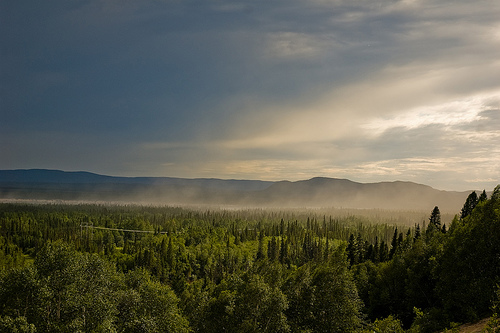
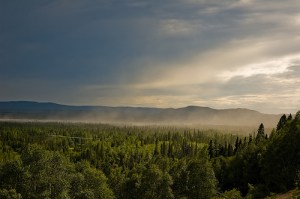
    4. The Boreal Forest: This exhibit presents a fabulous photographic aerial journey over Canada’s boreal forest.
    5. They’re Here!: This exhibit presents invasive exotic species, one of the greatest threats to biodiversity.
    6. Tightly Knit: The objective of this exhibit is to show the unity of biodiversity through the species that constitute it and their interactions.
    7. Woodland Escapes: This photographic exhibit is above all a tribute to the beauty of forests and an invitation to immerse oneself in these rich and valuable habitats.


For details or information on new exhibits and availability, please contact:

Patrice Lévesque
Traveling Exhibits Coordinator
The Biosphere, Environment Canada
160 Chemin Tour de l’Isle, Ile Sainte Hélène.
Montréal, Quebec H3C 4G8
Email: expos-exhibits.biosphere@ec.gc.ca.
Phone: 514-496-4408
Fax: 514-283-5021
Website: www.ec.gc.cabiosphere

The Biosphere also offers free activities through videoconference in schools across Canada. In an informal setting, an expert facilitator explores an environmental theme of your choice, linking science and technology along the way.

You can register for a video conference:

Online :  http://www.ec.gc.ca/biosphere/default.asp?lang=En&n=AE843E6D-1
By phone: 514-496-8282 or 1-866-487-8282
By e-mail: EDL-EDE.Biosphere@ec.gc.ca
Seul musée de l’environnement en Amérique du Nord, la Biosphère a pour mandat de sensibiliser et de susciter l’action et la participation environnementale de chacun. Abordant de nombreuses thématiques actuelles, ses expositions permettent de mieux comprendre les grands enjeux environnementaux liés à l’air, l’eau, la biodiversité, les changements climatiques et le développement durable. Afin de permettre à un plus grand nombre de Canadiens et Canadiennes de découvrir ses produits, la Biosphère vous offre ses expositions  en version itinérante. Outre ses activités muséales, elle offre également, sur place ou par vidéoconférence, un programme éducatif aux groupes scolaires et des sessions de formation aux professeurs, ONG et organisations gouvernementales.

Expositions itinérantes disponibles

    1. VIRAGE- vers un transport durable : cette exposition informe les citoyens de l’incidence des véhicules personnels sut l’environnement et la santé publique.
    2. Arctique : le fragile équilibre : cette exposition photographique offre aux visiteurs des informations sur la nature, la faune et la flore sauvage et les habitants de la région arctique.
    3. Le NGCC Amundsen : témoin des changements climatiques : cette exposition présente les répercussions du changement climatique sous l’angle du bateau de la recherche de la garde côtière canadienne, le NGCC Amundsen.
    4. La forêt boréale : cette exposition présente un voyage photographique fantastique au-dessus de la forêt boréale du Canada
    5. Elles sont là !: cette exposition présente les espèces exotiques envahissantes, l’une des plus grandes menaces pour la biodiversité.
    6. Tissée serrée : l’objectif de cette exposition est de montrer l’unité de la biodiversité pas les espèces qui la composent et leurs interactions.
    7. Escapades en forêt : cette magnifique exposition se veut surtout un hommage à la beauté des forêts et une invitation à s’imprégner de ces milieux riches et précieux.


Pour plus de détails ou des informations sur de nouvelles expositions et de leur disponibilité. S’il vous plait contactez :

Patrice Lévesque
Responsable des expositions itinérantes
La Biosphère, Environnement Canada
160 chemin Tour de l’Isle, Ile Saint Hélène
Montréal, Québec H3C 4G8
Courriel : expos-exhibits.biosphere@ec.gc.ca.
Téléphone : 514-283-5021
Site web: www.ec.gc.cabiosphere

La biosphère offre également des activités gratuites par vidéoconférence dans les écoles partout au Canada. Dans un cadre informel, un expert-animateur explique un thème environnemental de votre choix, relier la science et la technologie le long du chemin.

Vous pouvez vous inscrire pour une vidéoconférence :

En linge : http://www.ec.gc.ca/biosphere/default.asp?lang=Fr&n=AE843E6D-1

Par téléphone : 514-496-8282 ou 1 888-487-8282

Par courriel :EDL-EDE.Biosphere@ec.gc.ca

Navigant Report Fails to Address Concerns Raised by the Joint Review Panel

Navigant Report Fails to Address Concerns Raised by the Joint Review Panel

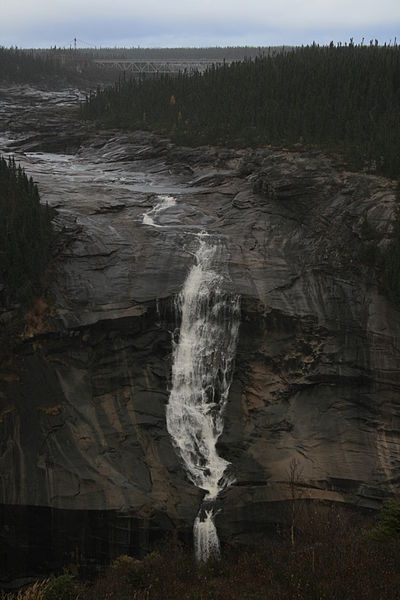
Upper Churchill Falls circa 2008 (Source: Wikipedia Commons)

HAPPY VALLEY-GOOSE BAY, LABRADOR, NL – “This report was commissioned and paid for by Nalcor, ” said Roberta Frampton Benefiel, Vice-President of Grand Riverkeeper Labrador Inc.  “Its purpose was to confirm the decision to go ahead with Muskrat Falls, not to question it.”

The Joint Review Panel (JRP) was not convinced that Muskrat Falls is “the best and least cost way to meet domestic demand requirements”, and called for an independent review to ask:  “What would be the best way to meet domestic demand under the No Project option?”  Navigant was not mandated to answer this question, and  it didn’t answer it.  Instead, it simply affirms that Nalcor’s assumptions are “reasonable”.

The Panel specifically required that the “independent reviewer” address certain specific issues, which Navigant failed to do, including, to mention a few:

  • Recall power options
  • Technologies that are not yet commercially available, but which will be within the 50-year study horizon,
  • Additional wind generation on the Avalon Peninsula,
  • More aggressive conservation and demand management (CDM).

“Navigants’s analysis is strictly cost based, and doesn’t even try to take the environmental and social implications of energy choices into account,” added Ms. Benefiel.  “Navigant did not even begin to address the JRP’s call for an “independent analysis of economic, energy and broad-based environmental considerations of alternatives”.

Furthermore, Grand Riverkeeper Labrador Inc. believes that Navigant erred in accepting some of Nalcor’s premises, in particular with respect to wind power and Conservation and Demand Management (CDM).

Navigant acknowledges that wind is ubiquitous, cheaper than smaller hydro, and readily available on the Avalon peninsula; without transmission upgrades, thereby confirming information presented to the Panel by the Helios Centre on behalf of Grand Riverkeeper.  Citing a 2004 study, Nalcor refuses to even consider requiring wind generators to curtail production during certain hours, even though their cost advantage is great enough to make this cost-effective.  Inexplicably, Navigant finds it “reasonable”.

Navigant acknowledges that saving energy costs less than Muskrat Falls or any other generation technology, estimating that CDM energy cost would be around $60/MWh.  Navigant relies, like Nalcor, on the 2008 Marbek study, but failed to note that Marbek’s estimate of potential savings is very much out of date.  There is no doubt that, if the Marbek study were brought up to date, the potential savings would be much higher, given the much higher energy prices forecast for the coming years.

The bottom line is that neither Nalcor nor Navigant adequately addressed the potential contributions of either Wind power or CDM to meet future generation requirements – two key elements of the Joint Review Panel’s recommendations.

Rate Impacts

Navigant indicates that the supply cost for Muskrat Falls energy is $76/MWh (2010$), and that adding the cost of the Labrador-Island Link (LIL) increases the capital costs by 73%.  This is coherent with Nalcor’s estimate that delivered cost of Muskrat Falls power is over 14 cents/kWh.

How, then, can it be that the average revenue requirement is far less than the cost of Muskrat Falls power (delivered), even later on, when Muskrat Falls is serving a significant portion of Island loads?  Nalcor’s rate impact projections are dubious on their face, and no supporting information has been released.

Curiously, Navigant was extremely cautious in its review of Nalcor’s rate impact analysis, declining to repeat the formulaic statement that “Navigant finds reasonable…”. used elsewhere in the report.

“The Muskrat-LIL project is a high-cost solution that can only make money for the government by taking it out of ratepayers’ pockets,” said Roberta Frampton Benefiel.  “The Joint Review Panel had grave concerns about the economics of this project, which is why it called for ‘a separate and formal review of the projected cash flow of the Project…to confirm whether that component would in fact provide significant long-term financial returns to Government for the benefit of the people of the province’.” “The Navigant report does nothing to provide this assurance,” she added.

Grand Riverkeeper Labrador Inc. (www.grandriverkeeperlabrador.ca) first came together as a concerned citizens group in 1998 to challenge plans for a mega hydro dam project.  In 2005 they became affiliated with Waterkeeper Alliance (www.waterkeeper.org) and  joined some 200 other Waterkeepers worldwide.  The purpose of GRK is to preserve and protect the water quality and ecological integrity of the Grand River watershed and its estuary, through actions of public awareness, monitoring, intervention and habitat restoration.  It actively promotes economically and environmentally sustainable ecosystem management approaches that will maintain the heritage and intrinsic value of this river for present and future generations.

–          30 –

FOR MORE INFORMATION, please contact:  Roberta Frampton Benefiel at 709-896-4164 or 709-897-4241

Canadian Youth Climate Coalition Launches Education Campaign

Canadian Youth Climate Coalition Launches Education Campaign

Environment Canada hoax shows group’s distaste for government inaction on climate change

(St John’s, Newfoundland) – September 16 2011 — On September 14, the Canadian Youth Climate Coalition successfully impersonated representatives of Environment Canada by announcing the relaunch of a discontinued climate change education program. What a Difference a Degree Makes, a module delivered to elementary school students during the 1990′s, focused on the science and human impacts of climate change. Through this hoax the Canadian Youth Climate Coalition has highlighted the Canadian Government’s deliberate neglect of its responsibility to educate Canadians about climate change and to take real, effective action on reducing carbon emissions. To remedy the lack of climate education available through the public school system, the Canadian Youth Climate Coalition is launching its own educational campaign, The Wings of Change.

“The government is making an embarrassingly weak effort to prepare youth with the skills and knowledge they need in order to create a sustainable future,” says CYCC member Meghan McCarthy. “The Wings of Change gets students thinking about the causes of climate change, their impacts on humans and their changing environment, and potential solutions. It looks at climate change as a social justice issue, and helps students to link individual actions to collective change.” At the end of each workshop, students are asked to write and draw the world they want to see 20 years in the future onto fabric feathers. These feathers are later assembled into a large bird costume, which will literally carry the dreams of children on its wings.

The CYCC believes that this educational campaign is a critical part of the youth climate movement. “It’s really difficult for a few people to make a big change, particularly when our government is actively ignoring us when we speak out through regular channels,” says McCarthy. “But when we can create a movement of educated critical thinkers demanding climate action in creative and compelling ways, that’s when we’ll see real change. That’s what has motivated me to host Wings of Change workshops here in St. John’s. I want youth in my community to stand up to systems that create climate change, and I want them to fight for their future.”

If you are interested in having a Wings of Change workshop in your/your children’s school, please contact info@ourclimate.ca. To donate to this project, go to smallchangefund.org/projects/wings-of-change/


For comment:
Meghan McCarthy
709-725-5769
meghanemilymccarthy@gmail.com
Canadian Youth Climate Coalition Volunteer

Environmental educator (Brother Brennan Environmental Education Centre)

The Brother Brennan Environmental Education Centre, off Salmonier Line, is looking for an enthusiastic and energetic person to help deliver their environmental programs to school children this fall until the end of November. Duties will include teaching grades 5 to 8 students and overnight supervision in a wilderness setting. Knowledge of Newfoundland’s natural history, environmental issues and a love of the outdoors are an advantage. Experience working with children is a great asset. An up to date certificate of conduct, a first-aid certificate and the ability to be flexible are essential. Own transport preferred, but carpooling may be available.

Pay will be $14 an hour. There will usually be either 24 or 48 hours of work a week. Please send a cover letter and resume embedded in an email to helenspencer@esdnl.ca by Wednesday September 14.

Helen Spencer

Environmental Education Teacher

Brother Brennan Environmental Centre

C/O 40 Strawberry Marsh Road

St John’s, NL

A1B 2V5

Ducks Unlimited Seeks Conservation Project Ideas

Ducks Unlimited Seeks Conservation Project Ideas

Photo: flickr.com/bernadettemacphersonmorris

As part of our long term conservation planning Ducks Unlimited Canada (DUC) is seeking ideas for potential conservation projects in your community.

Project Ideas can include but are certainly not limited to:

  • Wetland enhancement or restoration
  • Locations for placing eider duck and cavity nest shelters by community volunteers
  • Wetland buffer establishment or restoration
  • Community driven environmental monitoring projects
  • Wetland clean ups
  • Potential sources of funding for any of the above

DUC is especially interested in exploring community driven efforts since in order to complete projects in your community we will need to work together to find the resources to do so.

If you have a project idea in mind that fits within our aims we would love to hear about it!


For more information or to share your ideas contact:

Danielle Fequet

Conservation Programs Specialist

Ducks Unlimited Canada

Ph: (709) 637-3131

d_fequet@ducks.ca


Ducks Unlimited Canada is a private, non-profit organization that conserves, restores, and manages wetlands and associated habitats for waterfowl. These habitats also benefit other wildlife and people. For more information, visit http://www.ducks.ca.

Joint Review Panel Finding on Lower Churchill Represents a Victory for the People of Labrador

Joint Review Panel Finding on Lower Churchill Represents a Victory for the People of Labrador

Photo: flickr.com/olya

HAPPY VALLEY-GOOSE BAY, LABRADOR, NL – “The Review Panel’s report reflects what we have been saying all along,” said Clarice Blake Rudkowski, president of Grand Riverkeeper Labrador Inc.: “The Lower Churchill project does not make economic sense, and environmentally, it’s simply and clearly too destructive.”

“Labrador doesn’t want this project, and Newfoundland doesn’t need it” says Grand Riverkeeper Roberta Frampton Benefiel.  “Given the high transmission costs, the initial cost of Muskrat Falls power on the Island will be just as high as Holyrood, and the cost will keep going up for decades.”  She added that there are almost certainly better alternatives, including conservation, on-Island wind, and other options, including offshore gas to fuel Holyrood for backup.  “As the Panel pointed out, Nalcor sees the project as an end in itself, so it has never really looked for alternatives,” she said.

The Panel looked in detail at the justification for the project, alternatives to it and the many environmental concerns raised by participants in the public hearings.  It found that “Nalcor’s analysis that showed Muskrat Falls to be the best and least cost way to meet domestic demand requirements is inadequate,” prompting it to call for a formal financial review and an independent analysis of alternatives before the project could proceed.

In its report, the Panel determined that the Project would have several significant adverse environmental effects, and concluded that Nalcor did not carry out a full assessment of the fate of mercury in the downstream environment.  It stated that, in the event of dam failure,  Nalcor “should assume liability” for all personal and financial losses, regardless of cause.  And it concluded that, if alternative ways of meeting Newfoundland’s electricity needs in a way that is economically viable and environmentally and socially responsible, the Muskrat Falls project as proposed should not be permitted to proceed.

Grand Riverkeeper Labrador Inc. participated in all of the Panel’s hearings in the province and, along with other members, made 21 separate submissions.  It engaged several experts, including Philip Raphals of the Helios Centre, an expert in energy policy, to analyze the need, justification and economics of the proposal.  The Review Panel retained many of his findings and recommendations concerning the inadequacy of the analysis presented and need for careful assessment of alternate supply strategies for Newfoundland.  As well, our scientific advisors successfully challenged many of Nalcor’s assertions.

Grand Riverkeeper Labrador Inc. calls on Nalcor and the Government of Newfoundland and Labrador to respect the Panel’s findings and follow its recommendations.  Specifically:

  • It calls upon Nalcor to modify the Project in response to the 70 + recommendations concerning the biological and social environment;
  • It calls upon the Government to consult with stakeholders, including both supporters and opponents of the Project, as to the best way to proceed with the independent financial and alternatives assessment that the Panel called for, before governments decide on whether or not the project should proceed; and
  • It calls upon the Provincial Government, Newfoundland Labrador Hydro, Newfoundland Power and the Public Utilities Board to move forward with implementing an Integrated Resource Planning framework within the province, as called for by the Panel.


Grand Riverkeeper Labrador Inc. (www.grandriverkeeperlabrador.ca) first came together as a concerned citizens group in 1998 to challenge plans for a mega hydro dam project.  In 2005 they became affliated with Waterkeeper Alliance (www.waterkeeper.org) and joined some 200 other Waterkeepers worldwide.  The purpose of Grand Riverkeeper Labrador Inc. is to preserve and protect the water quality and ecological integrity of the Grand River watershed and its estuary, through actions of public awareness, monitoring, intervention and habitat restoration.  It actively promotes economically and environmentally sustainable ecosystem management approaches that will maintain the heritage and intrinsic value of this river for present and future generations.

–  30 –

FOR MORE INFORMATION, please contact:  Clarice Blake Rudkowski, President, Grand Riverkeeper Labrador Inc.  709-896-9530, Roberta Frampton Benefiel, Grand Riverkeeper & VP, 896-4164 or 897-4241 or Philip Raphals, Helios Centre, Montreal, 514-849-7900.


EXCERPTS FROM

REPORT OF THE JOINT REVIEW PANEL

LOWER CHURCHILL HYDROELECTRIC GENERATION PROJECT


August 2011


CHAPTER IV: PROJECT NEED AND ALTERNATIVES


SECTION 4.1.  NEED, PURPOSE AND RATIONALE


p. 23

The Panel concludes that, for its assessment, it considers the Project need to consist of three elements:  address  the future demand for electricity in Newfoundland and Labrador; secure a sustainable future for the Province; and, generate long-term revenues for the people of Newfoundland and Labrador.


The Panel recognizes that the scope of the Project for environmental assessment purposes includes both the Gull Island and Muskrat Falls generating facilities and interconnecting transmission lines, and notes that the two generating facilities are subject to separate sanction decisions by Nalcor and its shareholder, the Government of Newfoundland and Labrador.


Because Gull Island and Muskrat Falls are subject to separate sanction decisions, the Panel has assessed them separately with respect to alternatives,  justification in energy and economic terms, and where possible, with respect to other considerations.


p. 24-26

The Panel notes that Gull Island is no longer Nalcor’s preferred starting Project even though as a generating facility it has a much lower per unit generation cost than Muskrat Falls, and therefore would be a better option for meeting domestic demand provided the surplus energy could be sold. The Panel can only assume that the lack of transmission access through Quebec for Gull Island energy is a significant factor in that decision….


The Panel notes that the main driver for the Muskrat Falls projected cash flow provided to the Panel comes from Nalcor’s projected Island domestic rates that continue to escalate by two percent per annum even after Project debt payout. There are also questions about the regulatory treatment of Muskrat Falls by the provincial Government and the Public Utilities Board. It is not clear how much of the overall Muskrat Falls cost would be permitted to be passed on to the Newfoundland  rate payer and what the implications are for the ability of Muskrat Falls to generate a long-term revenue stream for the Province. Further, Nalcor indicated at the hearing, that in its analysis, Muskrat Falls includes a high equity content (41 percent) and that the shareholder might forgo dividends so that not much of a revenue stream is expected from Muskrat Falls for distribution.


While the Panel concurs with Nalcor that the Panel’s role is not to conduct an “audit” of Project economics, it cannot help but note the significant issues created by the transmission access uncertainties discussed above and the impact these have on the Panel’s confidence level that the Project would in fact deliver the long-term financial benefits projected. …


The Panel has been told that Nalcor, its shareholder, and project financiers understand economic considerations sufficiently that unless markets and project viability are properly demonstrated, the Project cannot be sanctioned. The Panel notes that even if the Project as a whole, or Muskrat Falls or Gull Island individually, were to meet sanction requirements, it still might not necessarily provide long-term financial benefits to the Province for distribution, as projected by Nalcor. The Panel also notes that governments are expected to make their decisions on the environmental assessment of the Project before knowing whether either of Muskrat Falls, Gull Island, or both, would be sanctioned.


Whether the Project is considered as a whole or as separate generating facilities, the Panel finds that there are two significant outstanding questions. The first is whether the Project is the best alternative for meeting domestic demand. This is addressed in Section 4.2, Alternatives to the Project. The second has to do with the availability of transmission access to deliver a significant portion of the Project’s energy to export markets, whether markets would be for Muskrat Falls includes export capability of part of the output via the planned Maritime Link. However, no certain transmission capability has been identified for the much larger energy output of Gull Island.

The Panel concludes that, in light of the uncertainties associated with transmission for export markets from Gull Island, Nalcor has not demonstrated the justification of the Project as a whole in energy and economic terms.

The Panel further concludes that there are outstanding questions for each of Muskrat Falls and Gull Island regarding their ability to deliver the projected long-term financial benefits to the Province, even if other sanctioning requirements were met.


RECOMMENDATION 4.1 Government confirmation of projected long-term returns.

The Panel recommends that, if the Project is approved, before making the sanction decision for each of Muskrat Falls and Gull Island, the Government of Newfoundland and Labrador undertake a separate and formal review of the projected cash flow of the Project component being considered for sanctioning (either Muskrat Falls or Gull Island) to confirm whether that component would in fact provide significant long-term financial returns to Government for the benefit of the people of the Province. Such financial returns must be over and above revenues required to cover operating costs, expenditures for monitoring, mitigation and adaptive management, and financial obligations to Innu Nation. The Panel further recommends that the Government of Newfoundland and Labrador base these reviews on information on energy sales, costs and market returns that have been updated at the time of sanction decision, and make the results of the reviews public at that time. The financial reviews should also take into account the results of the independent alternatives assessment recommended in Recommendation 4.2.


SECTION 4.2.  ALTERNATIVES TO THE PROJECT

p. 33-35

[I]t is the Panel’s position that Nalcor’s inclusion of developing the hydroelectric potential of the lower Churchill River as a Project need led to an inadequate consideration of alternatives to meeting its other stated needs. …

Nevertheless, there are many outstanding issues and these remain despite the considerable attention given to this subject through relevant information requests and at the hearing, including the Panel’s March 21st letter to Nalcor,  Nalcor’s response dated April 1st , and the special hearing session on April 13th  to address both. In summary, these include: the significance of several different domestic demand projections; widely different views regarding the potential contribution of energy conservation and demand management to reduce overall energy demand; criticism of current efforts in this province compared to other jurisdictions regarding conservation and demand management; potential contributions of alternate on-Island energy sources; the significance, in energy cost comparisons to 2067, of available Churchill Falls power in 2041 and recall power currently available; Nalcor’s cost estimates and assumptions with respect to its no Project thermal option; the economics of offshore gas as a potential less costly option than burning oil at Holyrood; cash flow projection assumptions for Muskrat Falls and implications for Provincial ratepayers and regulatory systems.


It is the Panel’s view that all of this should be addressed by commissioning an independent analysis of alternatives. Based on what participants said, such an analysis would provide needed credibility and would be beneficial to both Nalcor and the Government of Newfoundland and Labrador. Further, without the independent analysis, matters regarding the Muskrat Falls income stream, implications for ratepayers, and what electricity rates might otherwise be, cannot be determined.


An appropriate question for the analysis to address is “What would be the best way to meet domestic demand under the No Project option, including the possibility of a Labrador-Island interconnection no later than 2041 to access Churchill Falls power at that time, or earlier, based on available  recall?” An independent analysis of this question would provide alternatives that could then be compared to Muskrat Falls and Nalcor’s primarily thermal option which was based on complete upgrading and replacement of Holyrood.


The ‘best way‘to meet domestic demand is not just the least cost. Environmental considerations should be taken into account. For example, without the Project, could some of the emissions from Holyrood  be partially or completely displaced by on-Island  renewable energy sources?


The Panel concludes that Nalcor’s analysis that showed Muskrat Falls to be the best and least cost way to meet domestic demand requirements is inadequate and an independent analysis of economic, energy and broad-based environmental considerations of alternatives  is required.


RECOMMENDATION 4.2 Independent analysis of alternatives to meeting domestic demand

The Panel recommends that, before governments make their decision on the Project, the Government of Newfoundland and Labrador and Nalcor commission an independent analysis to address the question “What would be the best way to meet domestic demand under the ‘No Project‘ option, including the possibility of a Labrador-Island interconnection no later than 2041 to access Churchill Falls power at that time, or earlier, based on available recall?” The analysis should address the following considerations:

  • why Nalcor’s least cost alternative to meet domestic demand to 2067 does not include Churchill Falls power which would be available in large quantities from 2041, or any recall power in excess of Labrador’s needs prior to that date, especially since both would be available at near zero generation cost (recognizing that there would be transmission costs involved);
  • the use of Gull Island power, when and if it becomes available, since it has a lower per unit generation cost than Muskrat Falls;
  • the extent to which Nalcor’s analysis looked only at current technology and systems versus factoring in developing technology;
  • a review of Nalcor’s assumptions  regarding the price of oil till 2067, since the analysis provided was particularly sensitive  to this variable;
  • a review of Nalcor’s estimates of domestic demand growth (including the various projections to 2027 in the EIS (2007, 2008, 2009 and the 0.8 percent annual growth to 2067 provided at the hearing);
  • Nalcor’s assumptions and analysis with respect to demand management programs (compare Nalcor’s conservative targets to targets and objectives of similar programs in other jurisdictions and consider the specific recommendations, including the use of incentives  to curtail electric base board heating, from Helios Corporation, among others);
  • the suggestion made by the Helios Corporation that an 800 MW wind farm on the Avalon Peninsula would be equivalent to Muskrat Falls in terms of supplying domestic needs, could be constructed with a capital cost of $2.5 billion, and would have an annual operating cost of $50 million and a levelized cost of power of 7.5 cents per kilowatt-hour;
  • whether natural gas, instead of oil, could be a lower cost option for Holyrood; and
  • potential for renewable energy sources on the Island (wind, small scale hydro, tidal) to supply a portion of Island demand.

There were also questions about planning mechanisms used by utility companies. Instead of the traditional approach of forecasting loads and finding the least cost generation solutions to meet them, some jurisdictions have moved to an integrated resource planning approach. Evidence was presented at the hearing that this approach has been used successfully in Hawaii and the Panel understands it is also being used in Nova Scotia and in some other jurisdictions in Canada.


RECOMMENDATION 4.3 Integrated Resource Planning

The Panel recommends that the Government of Newfoundland and Labrador and Nalcor consider using Integrated Resource Planning, a concept successfully used in other jurisdictions. Such an approach would involve interested stakeholders and look simultaneously at demand and supply solutions and alternative uses of resources over the medium and long term.



Marine Science Educator

ACAP Humber Arm is seeking a reliable and outgoing person for the position of Marine Science Educator.

Qualifications:

  •         Knowledge of marine science terminology and water quality issues
  •         Training or experience in using water quality testing devices
  •         Confident public speaker
  •         Experience working with groups of students an asset
  •         Willingness to work in outdoor setting aboard a large passenger vessel
  •         The ability to work independently
  •         The successful candidate will be asked to provide a certificate of conduct and complete first aid training.

Responsibilities:

The successful candidate will be primarily responsible for the delivery of ACAP Humber Arm’s Trading Books For Boats program.  This includes

  •         Establishing schedule for participating classes (approximately 25 classes)
  •         Informing schools and school board bussing depot of bussing needs/schedule
  •         Providing background information and required forms to participating teachers
  •         Securing necessary supplies
  •         Calibrating equipment
  •         Delivering program:
  1. a powerpoint presentation on concepts and terminology
  2. on boat session on water quality issues including water quality testing conducted by students
  3. guide students through established learning stations and completion of workbook
  4. in-class follow-up (if requested by teacher)
  •         Data entry
  •         Program evaluation with teachers and students

Travel:

  •         A valid driver’s license and use of a private vehicle is required.  Mileage reimbursement is offered.

Term:

  •         Twelve week position with possibility for extension. 
  •         Variable Monday to Friday.
  •         35 hours per week.  Hours to vary within 8am to 4:30pm frame (no lunch break), Monday to Friday.
  •         Latest possible start date is Tues, Sept 12th
  •         Candidate must be available for the duration without any need for extended time off

Application Requirements:

  •         Resume
  •         3 references

Apply to:

  •         Email:                   speddle@acaphumberarm.com
  •         Mail:                     P.O. Box 564, Corner Brook, NL, A2H 6E6
  •         In Person:            Office 2020, Forest Centre, Grenfell Campus


Resumes must be RECEIVED by 12 noon, Wednesday, August 31st


ACAP Humber Arm Inc. is a not-for-profit organization serving the Bay of Islands and Humber Valley regions of western Newfoundland.  The Association is governed by a volunteer board of director’s representing a diverse range of stakeholders from the fields of academia, government, first nations, industry, economic development and the community at large.  With a strong history of stakeholder engagement, credible scientific research and innovative responses to community needs, ACAP Humber Arm has established itself as a leader in integrated coastal management.  Efforts are concentrated in the areas of: marine water quality, coastal land use planning, and environmental education.

Organisations release environmental policy recommendations and all-party questionnaire

Organisations release environmental policy recommendations and all-party questionnaire

Photo: flickr.com/m.crosbie

The Newfoundland and Labrador Environment Network has released a set of Environmental Policy Recommendations and a Questionnaire for consideration of all political parties in the upcoming fall provincial election.

The environmental policy recommendations address a number of issues in our province: protected area establishment, climate change, offshore oil pollution, forestry management, mining, and wildlife protection. The companion questionnaire brings together questions related to many of these issues. “We are aiming to engage the parties and the voting public in a dialogue about how we as a province can transition towards environmental sustainability,” stated Chris Hogan of the Newfoundland and Labrador Environment Network.

The questionnaire and policy recommendations have been compiled through input of member organisations and partners of the Newfoundland and Labrador Environment Network.

 “The decline in caribou numbers across our increasingly fragmented forest landscapes is but one sign that resource development as now practiced in Newfoundland and Labrador is unsustainable. Implementation of these policy recommendations, with emphasis on comprehensive planning and adequate protected areas, will place us on a solid foundation with respect to the management and protection of our natural heritage,” offered John Jacobs of Nature Newfoundland and Labrador.

“We need to rethink and re-evaluate how we view and use our renewable and non-renewable resources in this province. All too often they are used to achieve short-term political goals with little consideration for future generations,” stated Fred Winsor of Sierra Club of Canada (Atlantic Canada Chapter). “We see this policy document as focusing on long term healthy environmentally sound strategies for deep rooted future economic stability.”

The policy document and questionnaire are being sent to all political parties, and responses to the questionnaire will be shared with the public prior to the election at www.nlen.ca.

The Newfoundland and Labrador Environment Network is a provincial network of approximately 35 non-governmental, non-profit environmental groups, including Sierra Club of Canada – Atlantic Chapter and Nature Newfoundland and Labrador, among others.

FILES:
Environmental Policy Recommendations – August 29, 2011
Environmental Policy Questionnaire – August 29, 2011


For further information contact:

Chris Hogan, Executive Director
Newfoundland and Labrador Environment Network
(709) 753-7898 / nlen.ed@gmail.com / www.nlen.ca  

John Jacobs, President
Nature Newfoundland and Labrador
(709) 738-3147 / jjacobs@nl.rogers.com / http://naturenl.ca 

Fred Winsor, Conservation Chair
Sierra Club of Canada – Atlantic Chapter
(709) 738-3781/ winsorf@nl.rogers.com  / www.sierraclub.ca/atlantic/


Renewable energy as a viable alternative to Muskrat Falls large hydro

Renewable energy as a viable alternative to Muskrat Falls large hydro

Photo: flickr.com/Ken Whytock

Over the past few months, Newfoundland government representatives and Nalcor officials have made repeated statements in your paper to the effect that green renewable energy sources such as wind energy are variable, intermittent, and therefore, unreliable.

In a letter to the Friday July 22nd edition of The Telegram Nalcor’s vice-president for the Lower Churchill stated “These (renewable) sources of energy are best used in an electricity system that has a back-up generation source – be that hydro or thermal generation – or one that has the ability to import power when its needed.”

It is our understanding that the Island of Newfoundland already has hydro generation sources which already supply most of the electricity and have already been able to incorporate 54 megawatts of electricity from the two existing wind farms at St. Lawrence and Fermeuse. Aside from re-configuring the electricity grid – which occurs anyway as supply and demand alters across the island with ongoing urbanization and industrial development – what are the actual challenges involved with expanding renewable energy production? Unfortunately, Nalcor has never provided any substantive definition of what it means by “a firm source of power” as it pertains to the production and supply of electricity – although it may relate to “spilling water” over the Province’s existing hydro-electric dams during times of excess hydro production – considered a cardinal sin in some hydro-electric engineering circles. Similarly it appears that neither the Newfoundland government nor Nalcor have evaluated, in a systematic way, the energy portfolio that will best meet the energy needs of Newfoundland and Labrador and reduce greenhouse gas emissions, while supporting local jobs and innovation.

Nalcor arguments against the incorporation of renewable energy sources such as wind, solar, biogas, tidal and geothermal are always placed in the context of Newfoundland’s “isolated island electricity system scenario.” However, what is being proposed by Nalcor and the present government is to depart from the closed island grid, mothball the Holyrood station, and sell non-green Muskrat Falls hydro power to the Maritime Provinces and possibly New England. This is touted as the “only” solution. Hence the “isolated island model” is being used to deflect and dismiss meaningful discussion of including our abundant green renewable energy sources.

Utilizing a combination of existing hydro-electric power; combined with the best green renewable technologies available; its seems quite possible that the oil-fired Holyrood generating station can be replaced without building Muskrat Falls. If done using Feed In Tariff legislation, thus permitting widespread decentralized local electricity production using wind, solar, bio-gas, tidal and geo-thermal sources, with the surplus being sold off the island to the Maritimes and New England, it would offer greater self-sufficiency, with economic and employment benefits to the province while maintaining reasonable electricity rates over the long term. In our view this is an option which should be explored.

In that context we would refer your readers and government and Nalcor officials to a recent study Harnessing Variable Renewables (Brussels, May 2011) completed by the International Energy Agency(IEA), an offshoot of the Organization for Economic Co-operation and Development(OECD). That report specifically addresses integrating renewable energy sources into electricity grids. It singles out hydro power as the most flexible of energy sources and the most capable of accommodating green renewable energy sources. Regarding energy storage and the variable nature of renewable energy sources, the report identified five top technological methods to integrate various sources of renewable energy into the grid to balance supply with demand. These methods include innovations such as better management of the electricity grid to meet actual demand and promote widespread green renewable energy production, conservation and efficiency.

In response to the warnings about global warming and ocean acidification, the green renewable energy industry, its associated technologies, and enabling Feed In Tariff legislation has grown rapidly around the world with wind and solar energy growing at double digit rates each year for the past five years. As we move forward to reduce greenhouse gas emissions we need to rethink our scope and perspective on energy production and conservation with a focus on the energy future. Based on the experiences of those engaged in implementing green energy sources the advances in technologies now offer many alternatives and options.

We have the solutions at our fingertips that will allow us to turn off Holyrood, thus reducing greenhouse gas emissions and the other heavy metals produced from burning heavy oil. This will protect citizens of the North-East Avalon from being exposed to further negative health effects resulting from such emissions. It will assist in transforming our economy which presently is dependent on offshore oil revenues which we know will run out. Before that happens we need to build an economy whose foundation is based on renewable resources with a renewable energy industry producing locally generated electricity to replace fossil fuels.

This can be accomplished using the best, most benign, renewable energy sources combined with state of the art technologies.

Fred Winsor
Conservation Chair
Atlantic Canada Chapter Sierra Club Canada

Originally submitted to The Telegram as a letter to the editor on August 14, 2011. Republished with permission of the author.

Commercial fisheries and ecosystem recovery

Commercial fisheries and ecosystem recovery

The common thread running through the many examples of commercial fishery recovery has been the establishment of “no fishing” or “no take” marine protected areas.

The recent news of east coast cod stocks slowly rebuilding failed to acknowledge a major contributing factor to recovery of groundfish on the eastern Scotian Shelf. Commencing in 1987 after many protests from fishers and fishing communities and the collapse of haddock stocks in that area, the Department of Fisheries and Oceans closed an offshore zone south and east of Halifax to all bottom trawling. That  area is now known as the Haddock Box. It encompasses over 4000 nautical square miles of what has been identified as groundfish spawning grounds. In 1994, shortly after the introduction of the cod moratorium, that closure was extended to include fishing activity from all gear types. Similarly in the 1990s, ocean scientists, with the assistance of the World Wildlife Fund, identified another area further east on the Scotian Shelf known as the Gully as a unique bio-diverse ecosystem. In 2004  this area of approximately 2000 square kilometers  was designated a Marine Protected Area and closed to fishing activity.

Given the experience of Marine Protected Areas(MPAs)  in other jurisdictions around the world,  which do not permit fishing, the outcomes on the Scotian Shelf are very predictable.  Countries which have identified and closed areas containing abundance and biodiversity to promote ocean recovery from over fishing have experienced significant commercial fisheries recovery directly linked to ocean recovery. These areas include: the coral reefs near the coast of New Zealand,  the Great Barrier Reef on the eastern side of Australia,  the Bering Strait off Alaska in the North Pacific,  the Barents Sea, the North Sea, MPAs off the Faroe Islands in the North-east Atlantic,  the west coast of the continental United States, and a section of Georges Bank off the New England states.

The common thread running through all of these commercial fishery recoveries has been the establishment of  “no fishing” or “no take” marine protected areas with commercial fishing occurring outside these closed areas.  The concept is not new as various countries have instituted closed areas to protect various sensitive ocean habitats for decades. In the South Pacific certain reefs have functioned as conservation no-take zones for centuries. France instituted closed nursery areas in its coastal waters to protect specific fisheries and fish stocks over two hundred years ago. In the twentieth century the benefits of closed areas were realized in the North Sea in the aftermath of World War II. There fishing  crews recorded high catches following five years of closure due to war.  In New Zealand in the 1960s ocean scientists began noticing major ocean and commercial fisheries recovery when once productive areas where closed to fishing activity. This experience has been repeated in many of the aforementioned areas above. In response to this positive experience some countries and regional fisheries management organizations(RFMOs)  have moved to close large areas of ocean,  often thousands of square kilometers from fishing activity. The results in many cases have been fairly dramatic as some jurisdictions have recorded major increases in their historic commercial fisheries.

In Canada while there has been much discussion about establishing Marine Protected Areas there has been little action.  Much of this stems from the official fog of denial which still clouds government policy as to why fish stocks collapsed in the first place. Many have still not come to terms with the implications of technological advances of the past 60 years. In hindsight it would seem that because we have the technology to fish everywhere does not mean that we should fish everywhere.  Similarly there are those who cling to opinions that single species management is possible when the best scientific information points to ecosystem management.

However in practical terms the evidence coming out of the eastern Scotian Shelf and the experience of  “no take” marine protected areas elsewhere in the world are fundamentally good news stories.  We can learn from, and build on, these positive outcomes.  There are other areas inside Canada’s two hundred mile economic zone which have been identified as excellent locations for marine protected areas. These need to be closed so commercial fishing can recover and ocean ecosystems can rebuild.

Sincerely,

Fred Winsor

Conservation Chair, Atlantic Canada Chapter, Sierra Club Canada

This letter to the editory was originally published in the Telegram on Aug 8, 2011. It has been republished with the permission of the author.

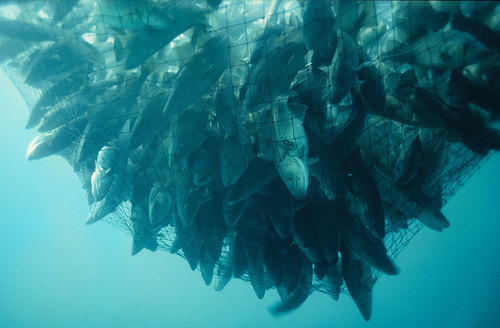
Photo: Sourced from Flickr Create Commons, photographer: derekkeats