
Green Conversations is a project of NLEN that aims to bring NLEN members and the wider community together to share information about environmental-related topics in Newfoundland and Labrador. People with particular knowledge and expertise on the various topics are invited to participate as conversation starters/ resource people. All welcome. All respectful views welcome.
Recap NLEN Green Conversation IV: BuZZ on the Bus!
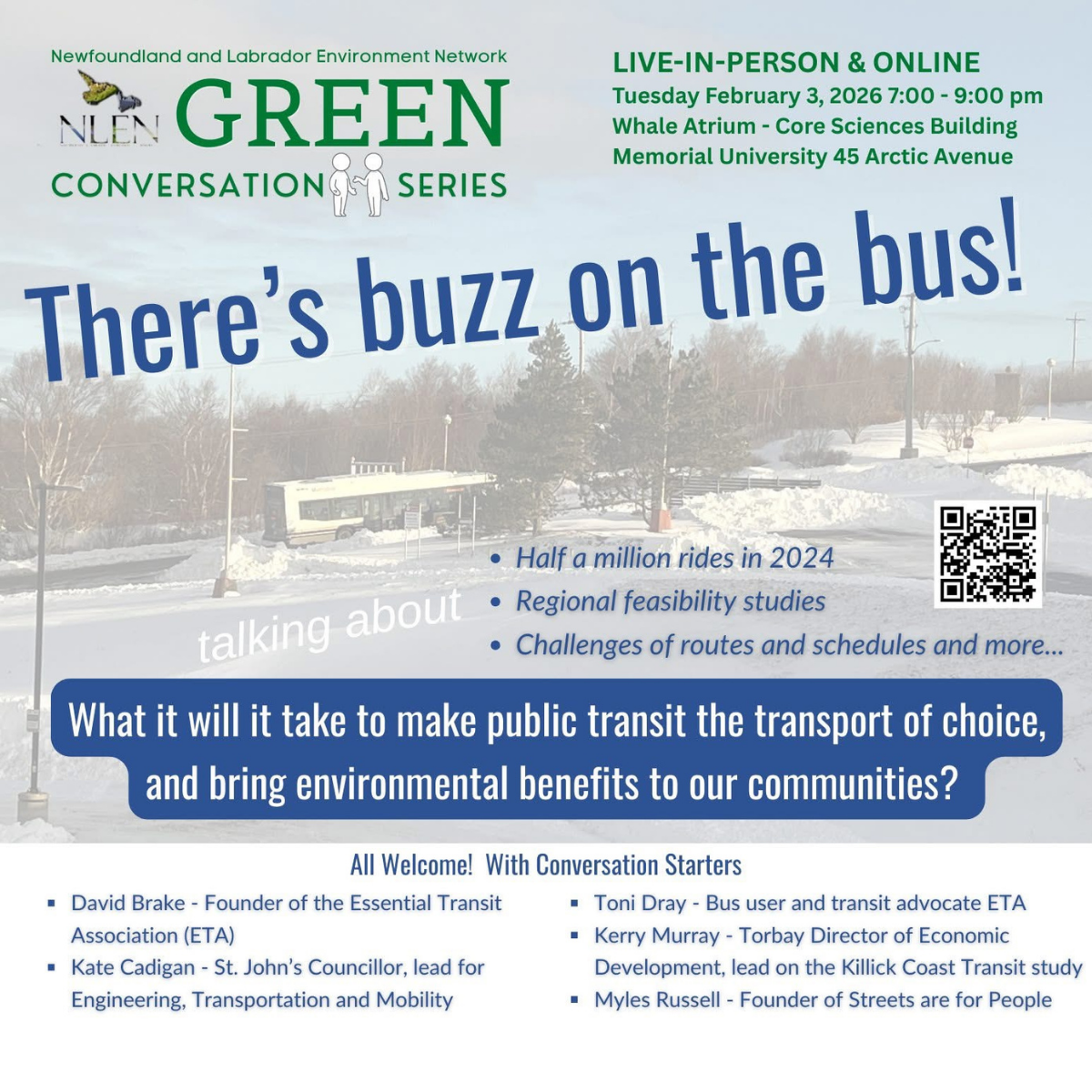
February 3, 2026/ Whale Atrium, Facility, Memorial University, St. John’s
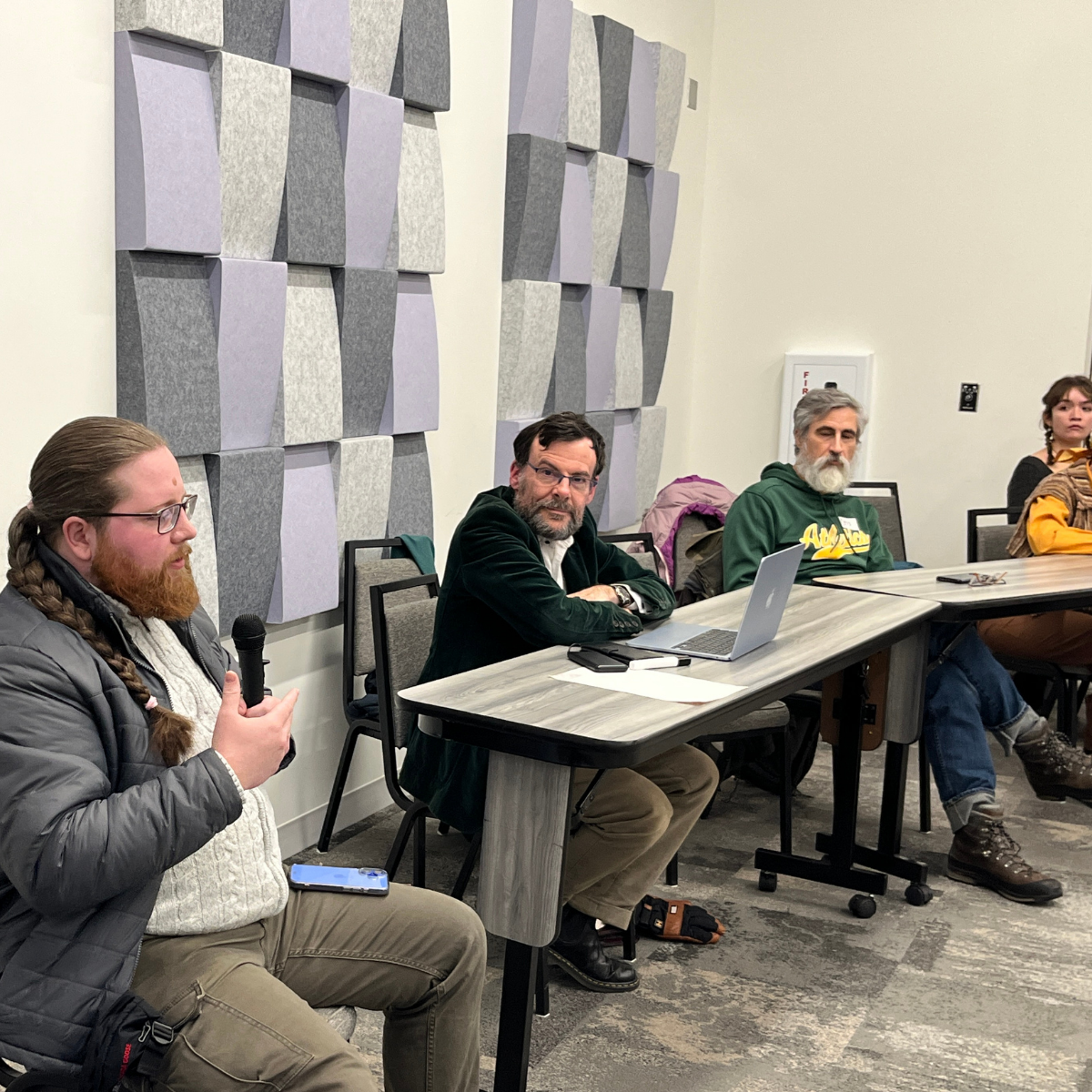
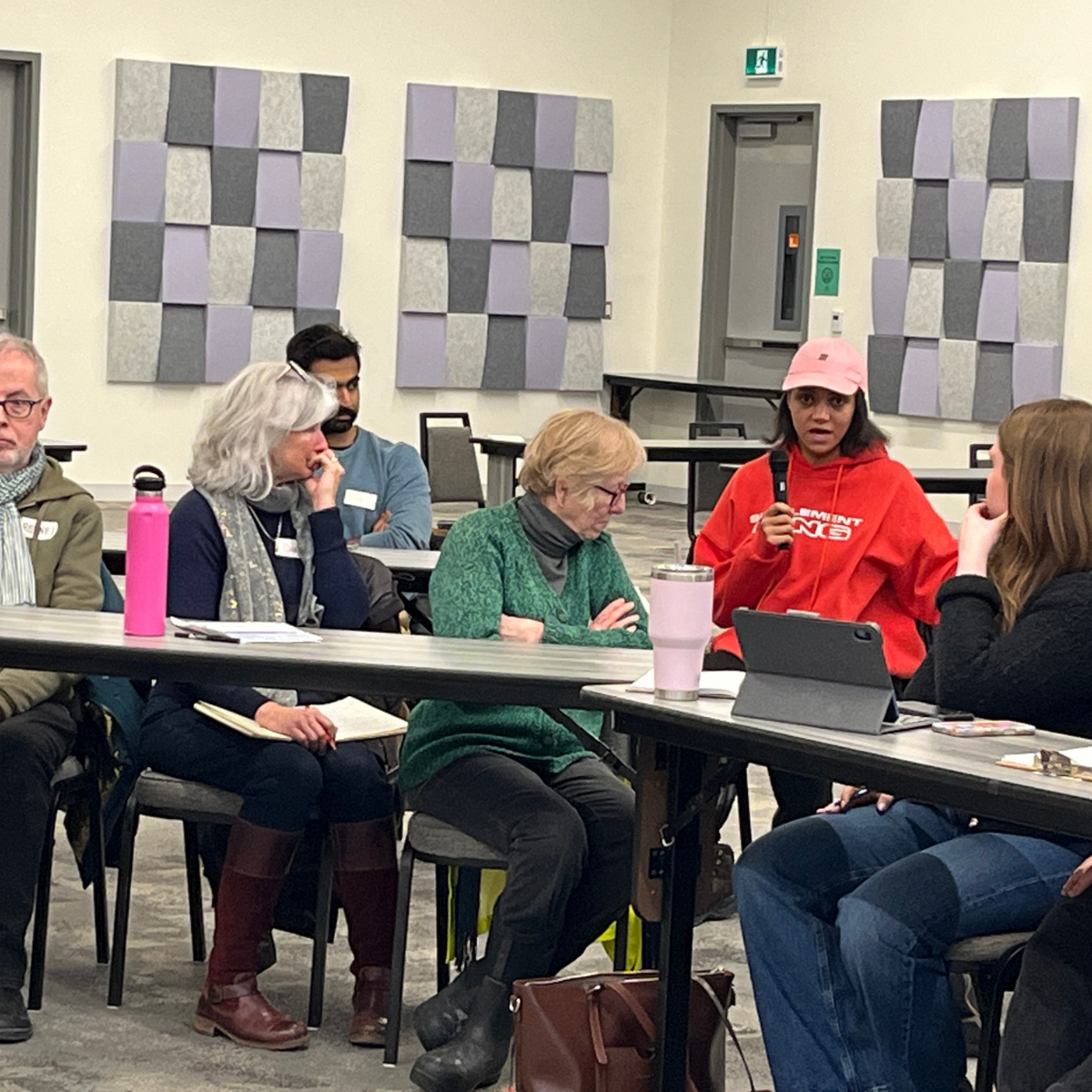
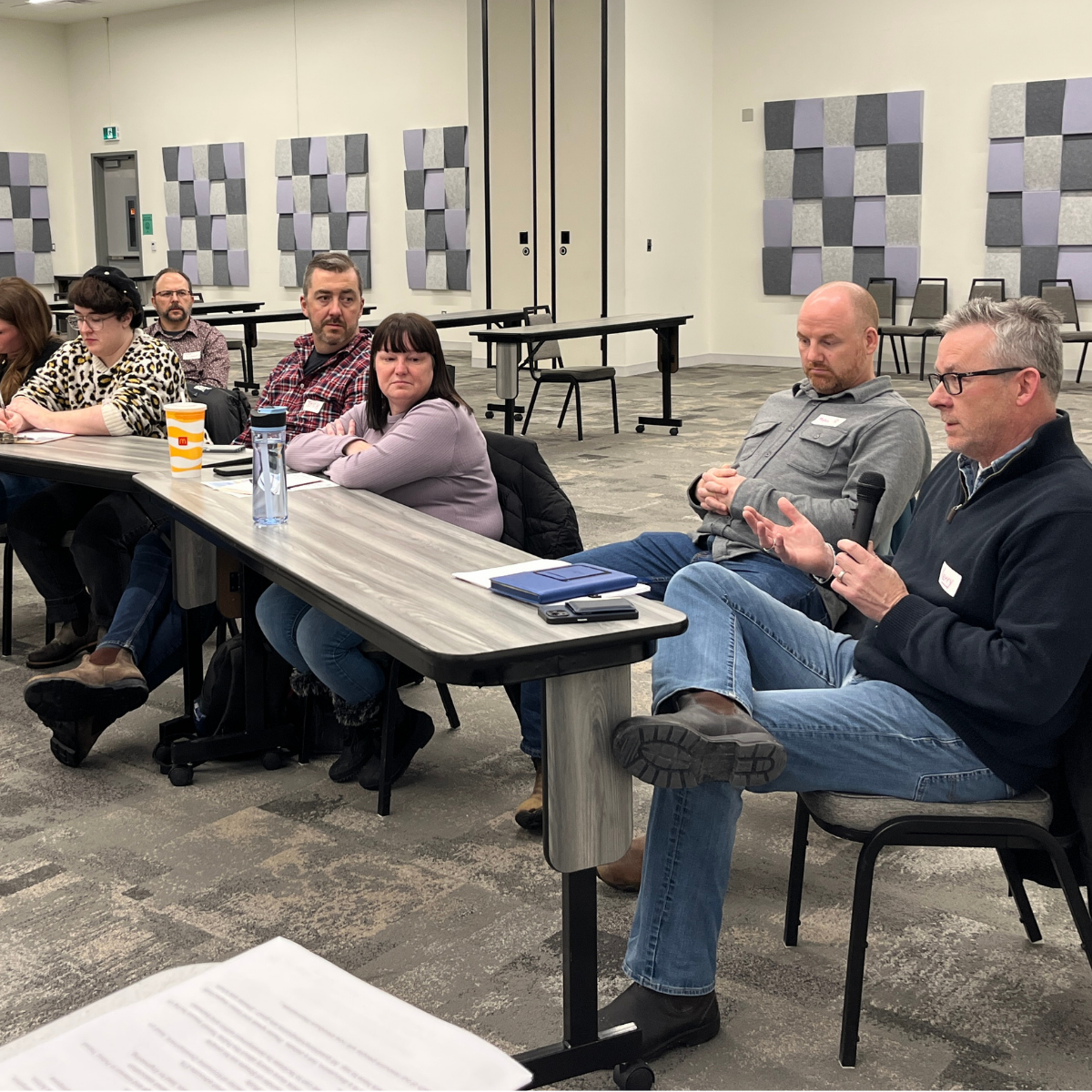
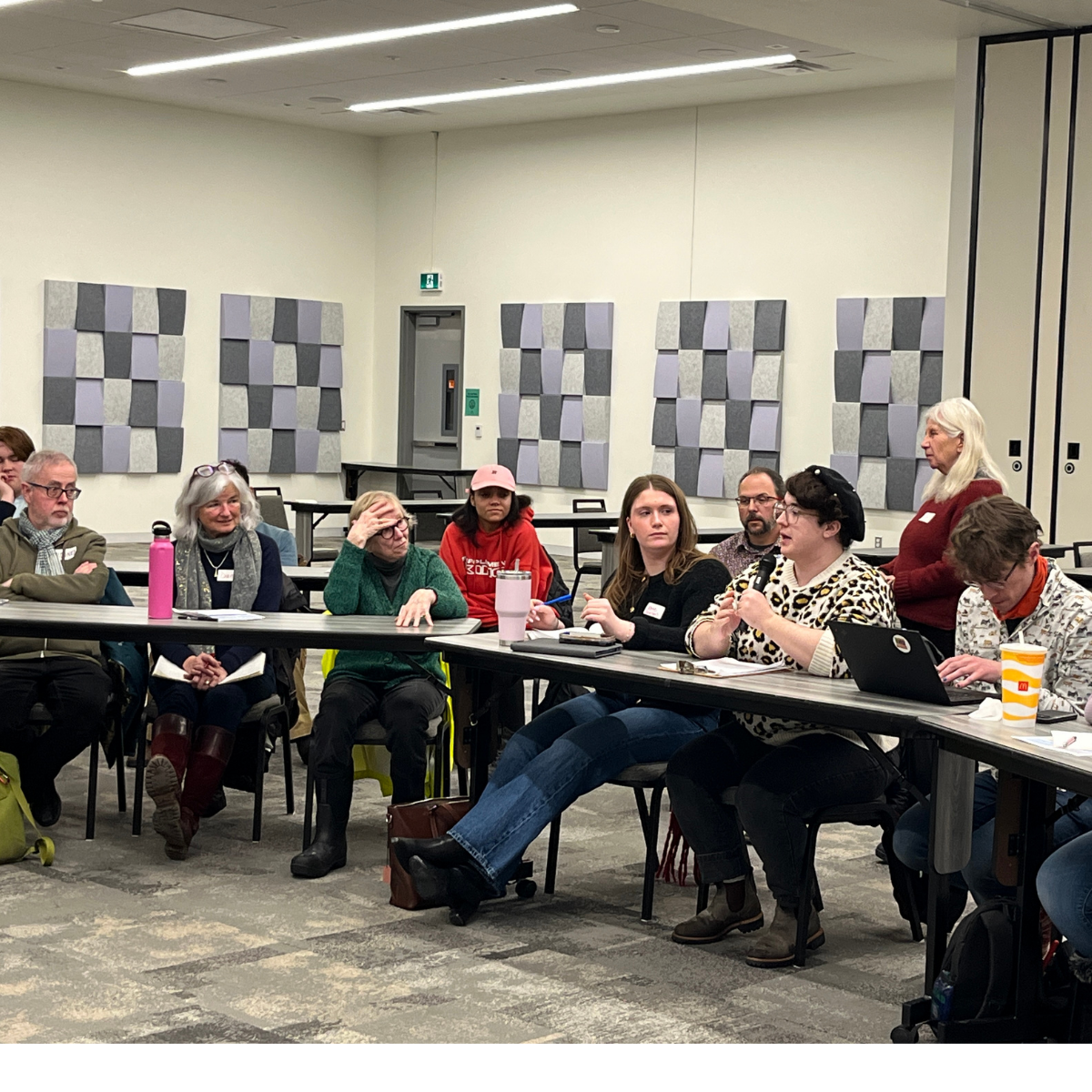
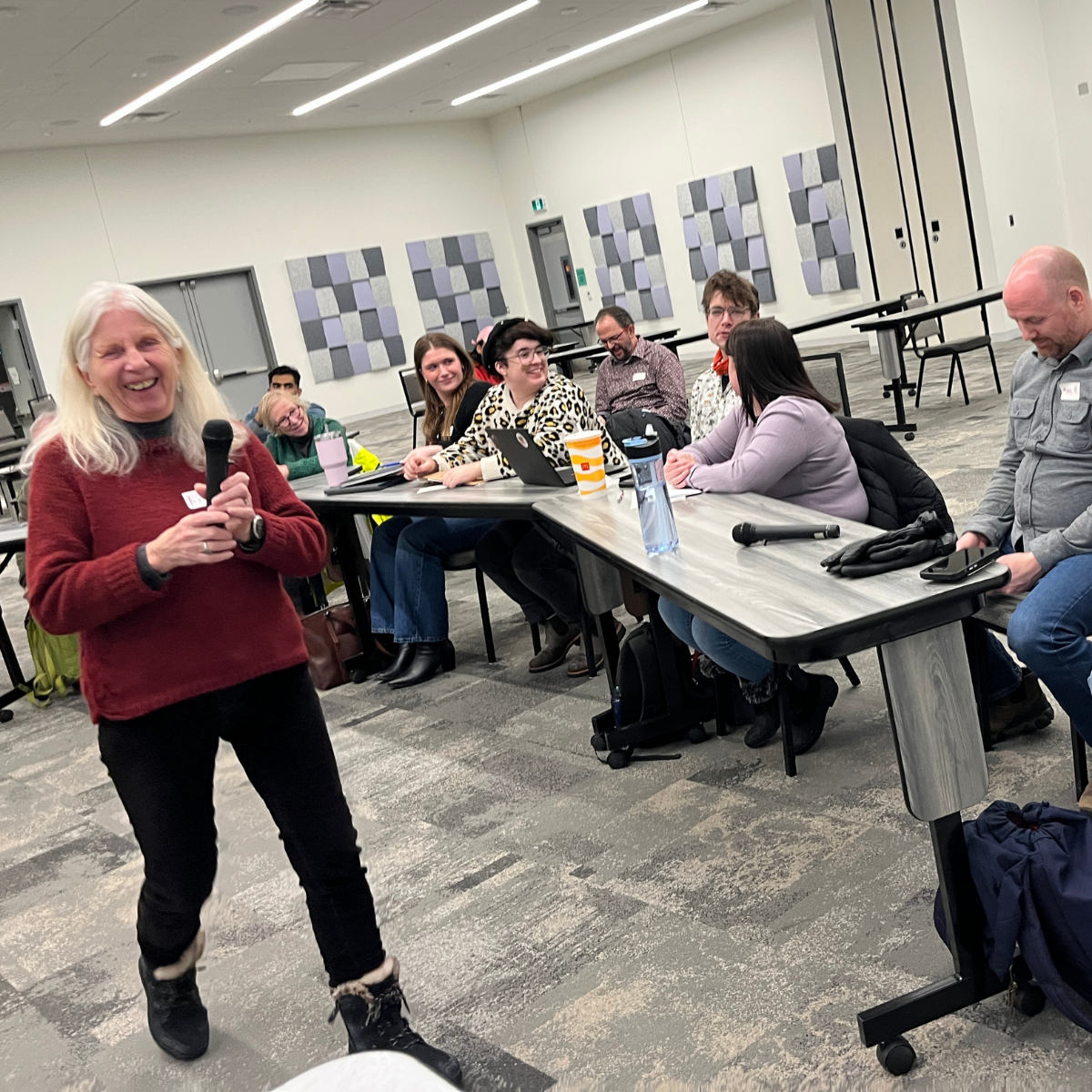
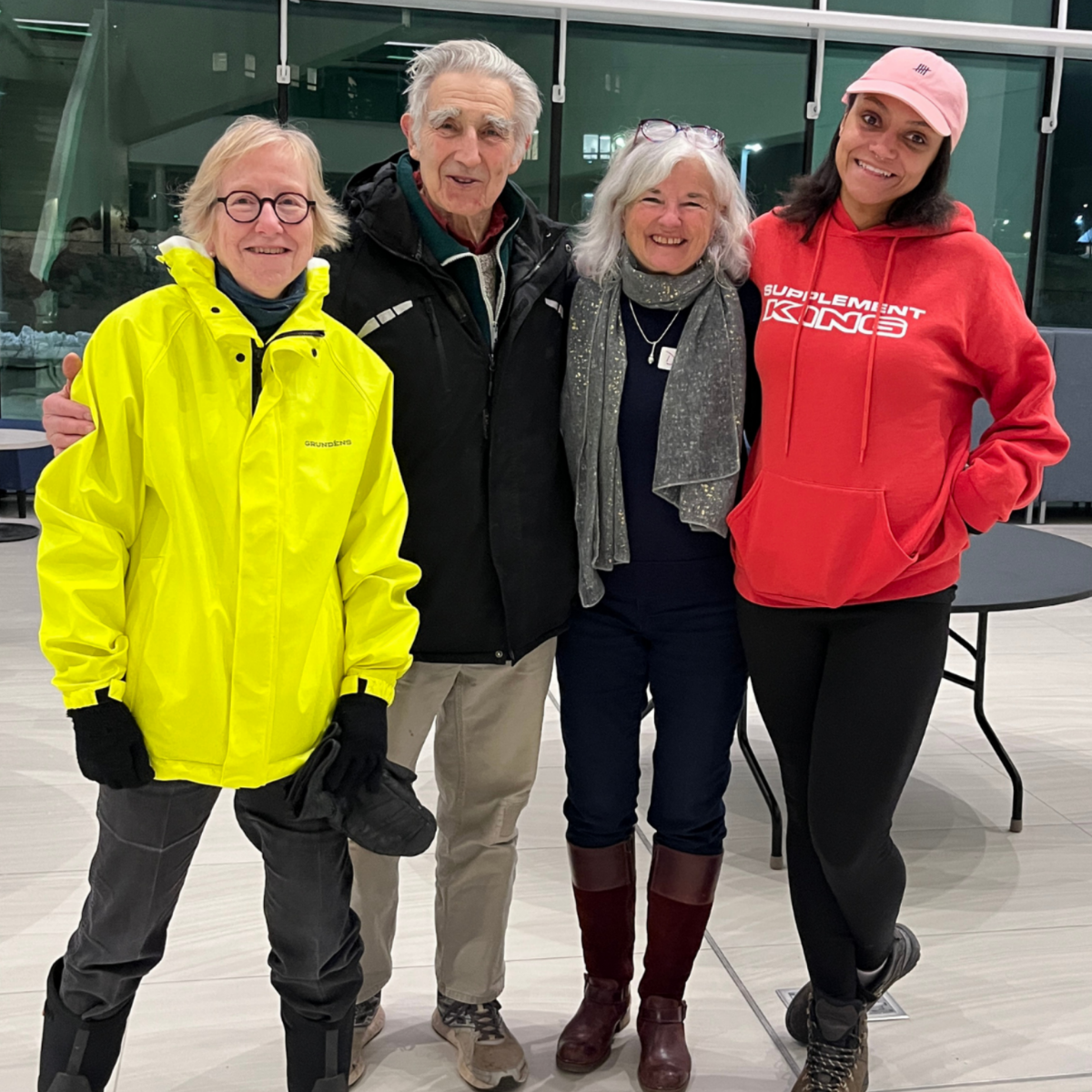
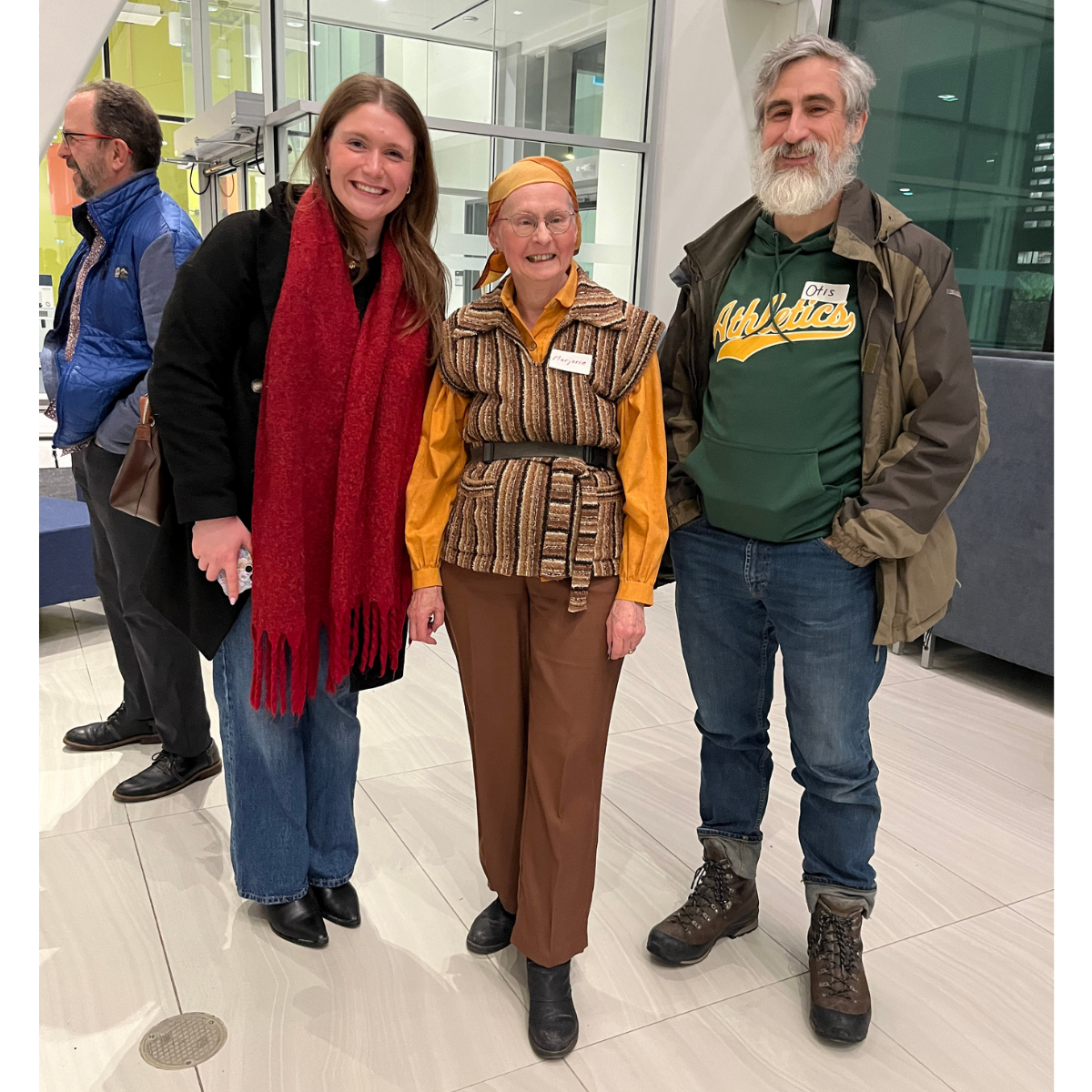
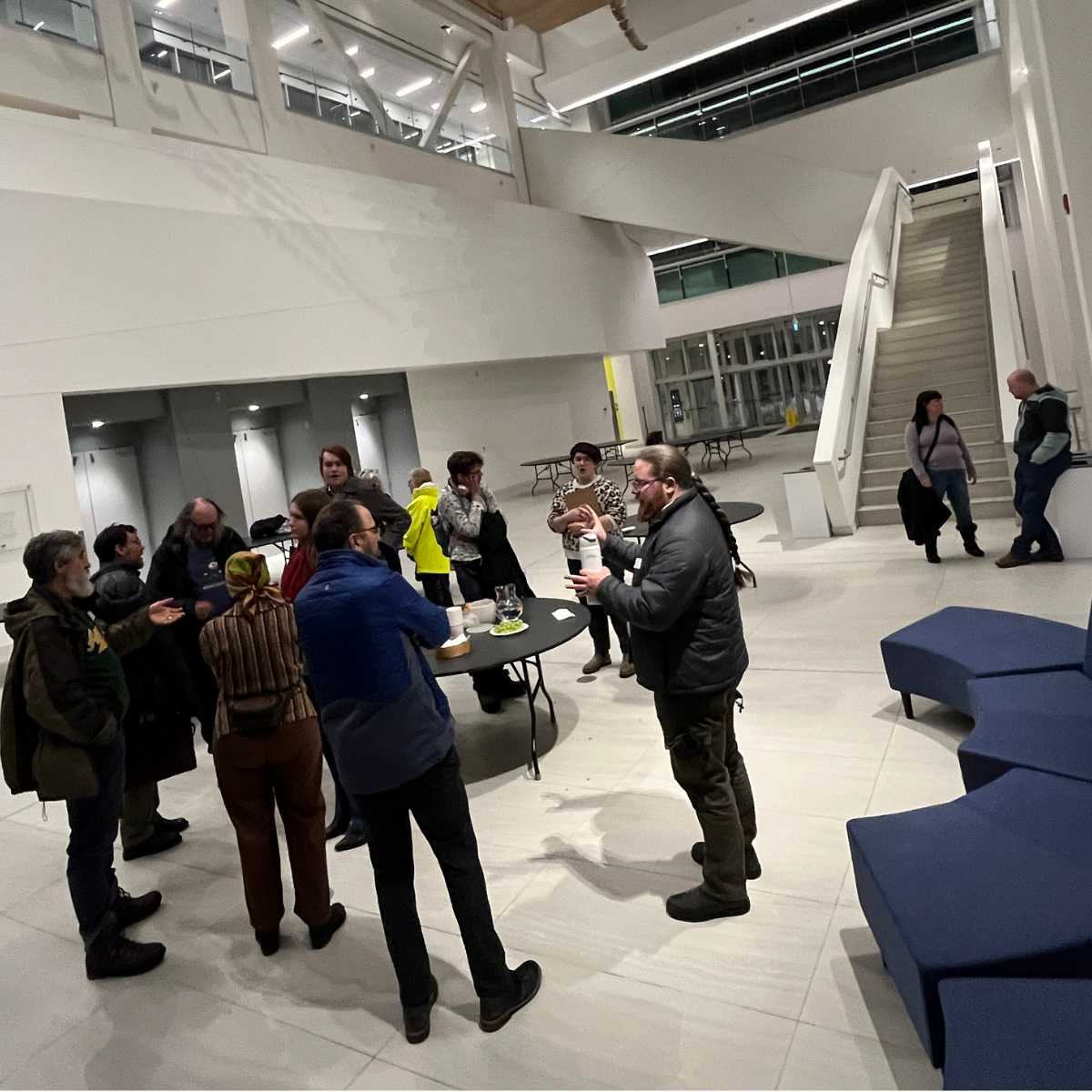
03/02/2026 Green Conversations – Buzz On The Bus! drew a large crowd to the Whale Atrium, Core Science Facility. Over the course of 90 minutes of conversation, to which most in attendance lent their voice and ideas, four main themes arose, which were:
- Service
- Safety
- Infrastructure
- Admin / running of metrobus
Attendees included regular riders who depend on the bus for transportation; want-to-be-riders who would like to take the bus (more, or more often) but do not due to a number of factors; people who have invested time in advocating for changes; and people whose role it is to grow and improve the public transit system.
Unfortunately, the audio did not work online and the meeting was not recorded (human error).
Here are some highights of the conversation broken out around the four main themes, as well as a New/In The Works section, and Big Picture.
SERVICE
We are in transportation poverty. People want to be the person who rides the bus but there are barriers.
Need to make sure that young people have better experiences.
Concerns were expressed about schedules (not frequent enough), routes (not well connected/delays to get across town), punctuality (often late), waiting conditions (roads, snowbanks)
Park and Ride
Many cars come into St. John’s to drive on the streets. A park and ride option to bring those users into town could offer efficiency and reduce the number of vehicles on City roads. However it’s not a convenient option if you have two appointments across town due to infrequent times.
The Park and Ride option for Canada Games and the Regatta have a lot of riders, but they were targeting 1) travellers without cars, and 2) a destination for a civic holiday.
In the case of 2), the Regatta Shuttle posed a big problem for people who needed the bus for transport to a regular destination.
Bus Shelters / Bus stations
People were concerned about bus shelters. Some have been removed. There is a concern about drug use and people inhabiting them.
Often the City does not own the land / bus stops are often located on private property which complicates the capacity for shelters.
Popular suggestion was to implement stations, as is the case in other jurisdictions.
SAFETY
Significant concerns expressed about safety to the point where it makes people not want to get on the bus or wait at certain stops, particularly in the evening. Some attendees felt that the presence of security guards was not a deterrent and that security only engaged when a problem was pointed out by passengers. Plus, they are only present until 4:30 pm.
INFRASTUCTURE
It was presented that transit is infrastructure and is core to the functioning of the city, no diffident than a sewer line.
St. John’s bus system is built on a hub and spoke system. Most other jurisdictions use spine and ribs or criss-cross system and enables more efficient route planning.
Idea shared to compare the cost of extra highways to the cost of running a good bus system. Then a good transit system shows savings.
ADMIN/RUNNING OF METROBUS
Communication challenges around reaching the commission when something is wrong and no one knows what to do. Email and telephone. Metrobus at night less safe / hit the window of the bus.
Shareholders / no sidewalk to the bus depot. Not accessible to the people you serve.
Some attendees felt the Metrobus app is messy and confusing.
NEW/IN THE WORKS
- Rural Routes
Food First is developing an asset map of smaller rural transit services ($60 to Bonavista any day)
- Killick Coast
- Killick Coast regional dream: To service the communities on the Northeast Avalon – Pouch Cove, Flatrock, Torbay, Bauline, and Portugal Cove-St Philips
- Link to Metrobus
- MetroBus
- Pay by tap visa or debit coming soon on Metrobus
- All stops will have a/v announcements
- MMobile app that shows where bus is on route
Big Questions
- What are the net economic gains for a well funded transit system?
- What would happen if the officials at City Hall relied solely on public transit for two weeks?
- What if public transit was run as a service and not a business? What if the the conversations about the business model are the wrong conversation. The conversation should be about how to make people’s lives better?
- Is there data on age-related usage?
- Would increased ridership reduce safety concerns?
Concluding Thoughts
We aren’t going to get a better transit system til EVERYONE wants a better transit system. Major changes are required as have been done in other jurisdictions – such as limiting the number of cars in city centres. Small improvements can help some of the challenges, but if the focus remains on making driving easier (eg creating more parking spaces), we are not going to realize the benefits of an improved public transit system.
Thanks to Memorial University’s Office of Public Engagement & Conference & Event Services for their support of Green Conversations.
–
Recap NLEN Green Conversation II: Promoting Personal and Environmental Resilience
May 15, 2025 / Whale Atrium, Facility, Memorial University, St. John’s
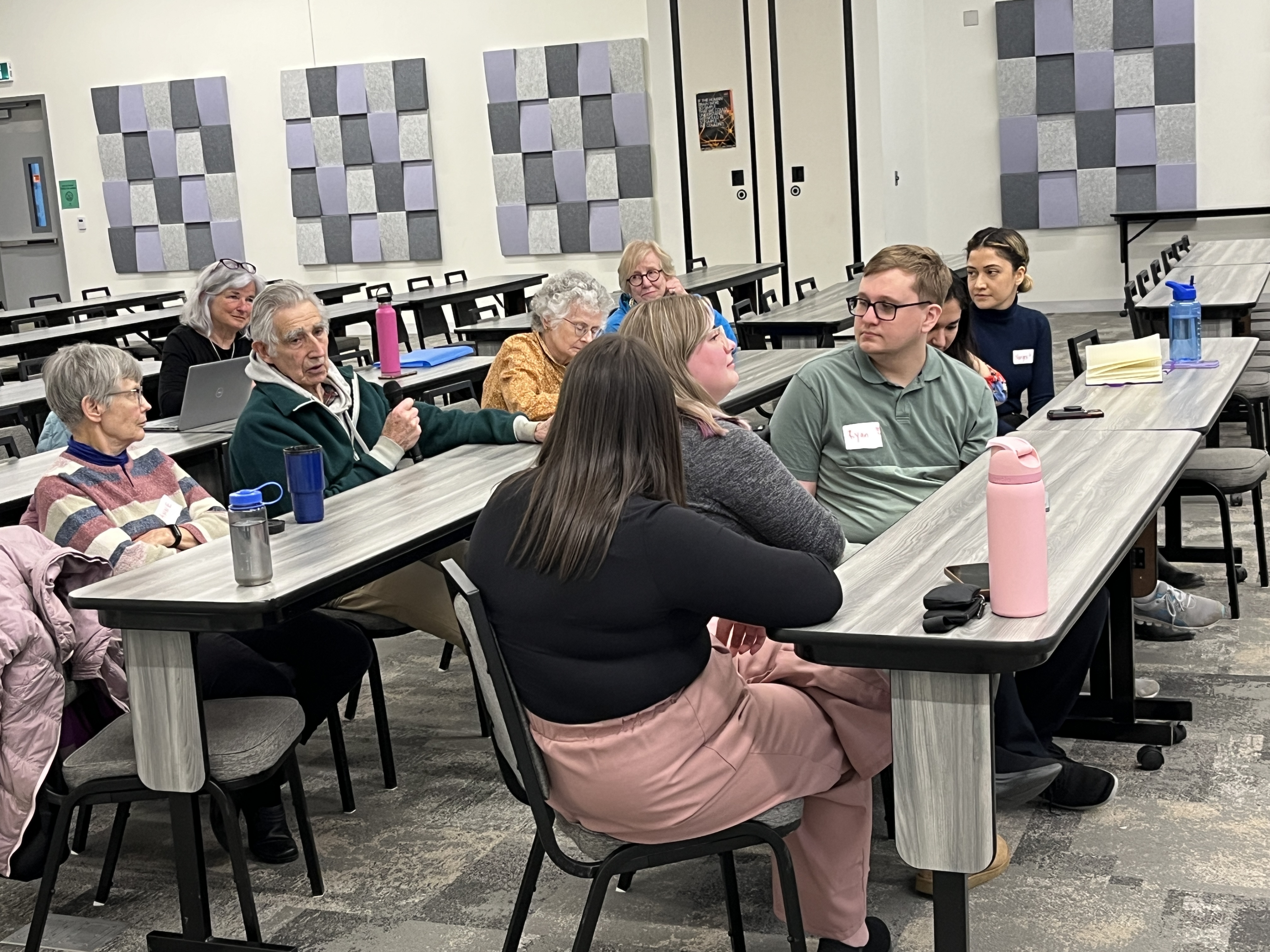
Resource People: Rita Anderson (Cognitive Psychologist, MUN), Marty Day (Social Psychologist, MUN), Kim Todd (Social enterprise, thegreenrock/Guide to the Good)
Participants: 12 – 20 in person, several on Zoom; Teens through seniors. Extensive, enthusiastic discussion by all – hard to summarize.
- Opening conversation
- “Dealing with Fake News, Disinformation and Misinformation”.
- Pay attention to source of information, author, date, biases;
- Fact checking; Social media (Facebook/Twitter) posts need critical evaluation;
- Beware of exaggerated headlines in news;
- Rage bait efforts to start arguments;
- AI summaries are biased by frequency of occurrence.
- Personal contributions: Often stuck in our group, confirmation bias è silo effect where we read/hear what we believe.
- Actions:
- Don’t forward questionable posts;
- Don’t argue, but consider asking “Why do you want to believe that?”
- Climate Actions, Advocacy:
- How to get people engaged?
- Assessing awareness of the problem, attitudes, emotions, biases;
- Changing attitudes è changes in behaviour;
- Life experiences influence present actions;
- Many feel that problem is too big for personal actions to count.
- Need concrete examples of how small things we can do can make a difference;
- Some environmentally good actions also save money.
- Some actions:
- Support sustainable businesses;
- Buy locally;
- Connect to community and nature;
- Grow your own—community gardens;
- Challenge car culture, bike paths;
- Inspire others by doing something;
- Assess personal carbon footprint;
- Do what you can.
- Some “excuses”:
- Too busy, money worries, burnout/emotional exhaustion; lazy; failure to consider implications of actions; expect new tech to solve problems; climate anxiety …
—
Thanks to Memorial University’s Office of Public Engagement & Conference & Event Services for their support of Green Conversations.


 Newfoundland & Labrador Environment Network