The Osprey (Summer 2012 issue) — seeking submissions

The Osprey and Nature NL would like to extend an invitation to authors for submissions for the Summer 2012 issue.

Articles, stories, research, information or opinions regarding nature and the environment in Newfoundland and Labrador are all welcome! Topics may include native or invasive species, citizen science, environment and industry, youth nature activities and more.

Submissions can be sent to osprey@naturenl.ca. Deadline for submissions for the Summer 2012 issue is June 30, 2012.

For more information, or to see previous issues, visit us at www.naturenl.ca.

Cheers,

Justin So
Co-Editor
The Osprey

New publication: NLEN Year in Review 2011

New publication: NLEN Year in Review 2011

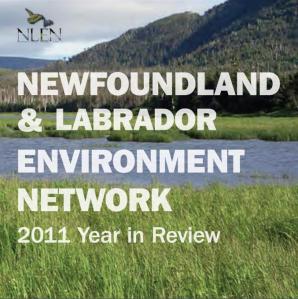
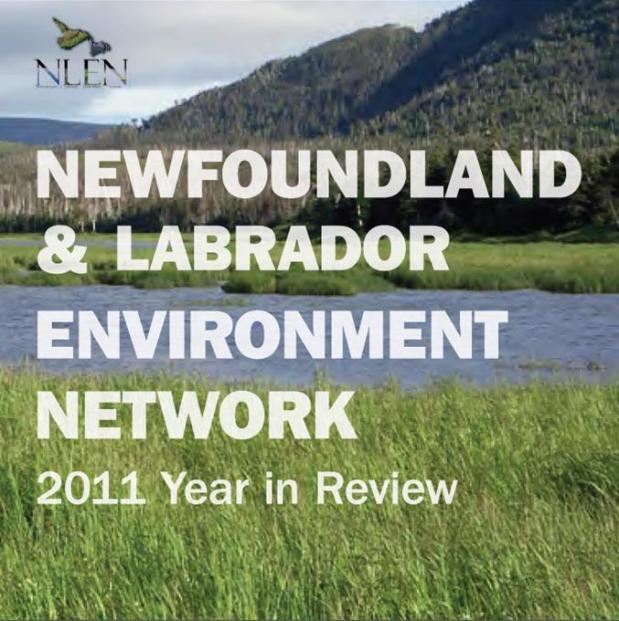
The Newfoundland and Labrador Environment Network is marking Environment Week (June 3-9) with publication of its Year in Review 2011. This publication celebrates some of the tremendous work being carried out by community-based environmental organisations in Newfoundland and Labrador. These groups are working on a host of different issues: environmental education, reducing our exposure to toxic chemicals, protecting biodiversity, encouraging local food production, undertaking community clean-ups, waste reduction, and much more. Have a look!

View: NLEN Year in Review 2011 (4 MB)


Feedback is welcome:

Email: Chris Hogan – nlen.ed@gmail.com

Phone: 709-753-7898


Local groups join national day of action in defence of Nature and Democracy

Local groups join national day of action in defence of Nature and Democracy


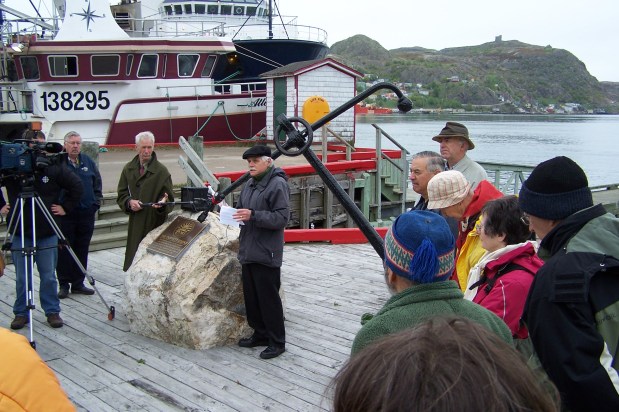
Black Out Speak Out press conference, Harbourside Park, St. John’s

ST. JOHN’S – Representatives of several Newfoundland and Labrador environmental and community organisations, scientists, and individuals are speaking out today as part of the national Black Out Speak Out campaign against the down-grading of an array of environmental protection measures as outlined in the federal Budget Bill C-38, and sweeping cuts to conservation science and programming.

Changes introduced through Bill C-38 will weaken legislation protecting fish habitat and species at risk, narrow the scope of environmental assessment, reduce transparency in government decision making, and down-load responsibility to the provinces. “In continuing its destruction of basic environmental protections this government shows its ignorance of the ecological foundation that sustains our way of life,” stated John D. Jacobs, President, Nature Newfoundland and Labrador.

“Changes to the environmental assessment process as well as the Fisheries Act endanger the air, water, land and oceans we all need for every day life,” echoed Simon Jansen of the Western Environment Centre.

The legislative changes are being introduced through an omnibus budget bill, thereby skirting the normal processes of parliamentary and public debate. “It is bad enough that Stephen Harper, as the unofficial CEO of Corporate Canada, is gutting the Fisheries Act and subverting the environmental protection process. What is most insidious is his attempt to subvert democracy and the right of free speech of citizens,” said Ken Kavanagh, Chair of St. John’s Chapter of Council of Canadians, and the Sandy Pond Alliance. “The vast majority of Canadians value and want to protect the environment but Stephen Harper is engaged in both a frontal and covert attack on those who speak out and demand that protection.”

Significant cuts to federal science programs, including environmental research and monitoring, are also raising alarm. “As the Harper government demolishes options for environmental science, legislation and protection for offshore hydrocarbon production and for a robust science-based approach to resource development throughout Canada, they increase the risks and real costs for all Canadians. It’s time to push back or be pushed under,” said Dr. Bill Montevecchi, University Research Professor, Memorial University.

“Changes to legislation, decimation of environmental science and an associated anti-science approach to resource policy are an attack on the continued health of Canada’s environment. One only need look at our waters; the very well-being of our fisheries resources have been opened to unprecedented damage through the diminution of the protection of fish habitat,” stated Dr. Ian Fleming of Memorial University’s Ocean Sciences Centre. “These changes have occurred without factual discussion nor broad consultation – in an absence of science. There is an apparent emphasis being placed on resource development with little regard for impacts on ecosystems and in essence, the environment that we depend on for our air, water and food. The health of Canadians is under threat.”

The Black Out Speak Out campaign has gained the support of a range of groups around the province and country who will all darken their websites on June 4 and send letters, tweets, and take other actions. “Securing civic space for marginalized voices to be heard is a critical part of Oxfam Canada’s work worldwide. That is why we are supporting our environmental and community allies in the Black Out Speak Out action,” said Bill Hynd, Oxfam Canada. “Bill C-38, with its disregard for protection of the environment at this time of rapidly expanding economic development, can only result in dire consequences for all life, human and non-human,” stated Sister Mary Tee, Coordinator, Mercy Centre for Ecology and Justice.

Launched on May 7, Black Out Speak Out invites organizations, businesses and citizens from across Canada to darken their websites on June 4, and speak out against changes introduced in the federal government’s budget act (C-38). The Black Out Speak Out campaign, coordinated by several of Canada’s largest environmental organisations, has engaged more than 15,000 people and 500 organisations to speak out.


Black Out Speak Out:

Website: http://blackoutspeakout.ca/  Facebook:  http://www.facebook.com/BlackOutSpeakOut

Twitter: #BlackOutSpeakOut


– 30 –


CONTACT:

John Jacobs
Nature Newfoundland and Labrador
709-738-3147 / jjacobs@nl.rogers.com


Ken Kavanagh
St. John’s Chapter of Council of Canadians, and the Sandy Pond Alliance
709-691-0991 / kavanagh.ken@gmail.com


Fred Winsor
Sierra Club of Canada – Atlantic Chapter
709-738-3781 / winsorf@nl.rogers.com


Chris Hogan
Newfoundland and Labrador Environment Network
709-753-7898 / nlen.ed@gmail.com


~~~~~~~~~~~~~~~~~~~~~~~~~~~~~


ANALYSIS:


What Bill C-38 means for the environment

Prepared by West Coast Environmental Law and Ecojustice, May 2012


The 2012 budget bill (Bill C-38) will weaken Canada’s most important environmental laws and silence Canadians who want to defend them. Instead of using the usual process for sweeping changes, which allows for thorough debate, these changes are being shoehorned into a 452-page budget bill.


The changes amount to:

• weakened protection for fish and species at risk;

• an entirely new — and less comprehensive — environmental assessment law;

• broad decision making powers for Cabinet and Ministers; and

• less accountability and fewer opportunities for public participation.


What follows is a list of the TOP 10 items of environmental concern in the budget bill.


1. Changes to the Fisheries Act mean that the law may no longer protect all fish and the waters where they live.

The new protection framework could exclude many fish and watercourses. Generally, habitat protection will only include permanent alteration or destruction of “commercial, recreational or aboriginal fisher(ies)” habitat and some activities will be exempt from the law regardless of how much damage they cause. The federal government will also be able to hand over the power to authorize destruction of fish habitat to provincial governments or other entities, which is worrisome.

2. No maximum time limits on permits allowing impacts on species at risk.

This means that there will no longer be any guaranteed review to evaluate ongoing impacts to endangered species. These potential ‘perpetual’ permits could continue even where there is a drastic decline in the population of a species affected by the permitted activity.

3. The National Energy Board (NEB) will be exempted from species at risk protections.

The NEB will no longer have to ensure that measures have been taken to minimize impacts on the critical habitat of at-risk species before the NEB approves a pipeline or other major infrastructure. For example, there is no guarantee that an environmental assessment will consider the impacts of a proposed pipeline project and related oil tanker traffic on the habitat of endangered orca whales before the NEB issues a certificate approving that pipeline.

4. The Canadian Environmental Assessment Act is being replaced with a new Act that will significantly narrow the number of projects that will be assessed for their environmental, social and economic impacts.

Assessments, when they happen, will be less rigorous and subject to time limits that will place further constraints on public and First Nations’ participation. The new Act will apply only to “designated projects,” but we don’t yet know what those will be. The new Act gives the Environment Minister and government officials broad decision-making power: The Canadian Environmental Assessment Agency would be able to exempt a  designated project from even going through the assessment process.

5. The federal government is offloading responsibilities to the provinces.

This is troubling because the patchwork of environmental laws and policies at the provincial level leave doubt as to whether they can act as a sufficient or legally defensible substitute for federal oversight. Prime examples of this offloading include shifting responsibility for implementation or enforcement of the Fisheries Act to provinces and eliminating many federal environmental assessments.

6. Cabinet is now granted authority to override a “no” decision of the National Energy Board.

This may allow politics of the day to trump an independent, objective process and undermine the NEB’s expertise.

7. No more joint review panels.

Where a major energy project will be subject to an NEB hearing, a Canadian Environmental Assessment Agency-enabled review panel is prohibited, so there will be no more joint review panels. Thus, the environmental implications of major energy projects will now be evaluated only by the energy regulator.

8. Broad decision-making powers are being shifted from the public realm and given to Cabinet and individual Ministers.

This means decisions related to fish habitat protection and environmental assessments will be allowed to be made behind closed doors with minimal public scrutiny.

9. Significant narrowing of public engagement in resource review panel hearings, particularly for major oil projects, pipelines and mines.

In order to participate, people will have to prove they will be directly affected or have relevant information or expertise. In some cases, their contributions may still be ignored.

10. Repeal of two important environmental laws.

The repeal of the Kyoto Protocol Implementation Act, means no more domestic accountability measures on climate change and the repeal of the National Round Table on Environment and Economy Act will phase out this valuable advisory body completely.



Websites black out across Canada in support of nature and democracy

Websites black out across Canada in support of nature and democracy

For National Release
June 4, 2012


Websites black out across Canada in support of nature and democracy

Today’s move triggered by omnibus federal budget bill


Websites of more than 500 Canadian organizations and businesses will be blacked out today, and tens of thousands of individuals are expected to send messages to party leaders in defence of nature and democracy via email and social media, as part of the nationwide Black Out Speak Out/Silence, On Parle campaign.

News conferences are being held in Ottawa, Vancouver, Montreal, Winnipeg and St. John’s today, where spokespeople representing the campaign’s founders and allies are speaking about the threats to nature and democracy posed by the current federal budget bill.

Launched May 7th by the country’s leading environmental organizations in response to the government’s concerted smear attacks on environmental charities and omnibus budget bill, C-38, the campaign has grown rapidly to include major not-for-profit and social justice organizations, trade unions, scientists, businesses and Canadian icons like author Margaret Atwood and musician Bruce Cockburn.

Support for the campaign has also spread to the United States, with several American organizations – including National Wildlife Federation, Sierra Club USA, 350.org, and Natural Resources Defense Council – also blackening their websites on June 4th.

“The darkening of web sites and the thousands of letters, blogs, tweets and other actions by landowners, businesses, First Nations, trade unions, scientists and  citizens, reflect the grave concern and deep frustration Canadians feel about the direction the federal government is heading,” said  Alex Neve, Secretary General, Amnesty International Canada. “Fundamental human rights such as Freedom of Expression are at stake.”

“The continued survival of B.C. icons like migratory salmon and steelhead are put at risk through this far-reaching omnibus bill. It’s bad policy. It’s bad democracy, and there will be a political price to pay if the government does not listen to Canadians,” stated John Fraser, Conservative fisheries minister in 1984-5. “I’m speaking out today because I’m a Conservative and nobody can pretend to be a real Conservative if they are not a conservationist.”

Over 500 groups including Oxfam, Amnesty International, the Canadian Labour Congress, faith groups, First Nations and all four opposition parties (NDP, Liberal, Green and Bloc Quebecois) are participating in Black Out Speak Out. The campaign is also supported by Canadian community leaders and cultural icons, including Nobel Prize winning scientist Dr. Andrew Weaver, Grand Chief Stewart Phillip, President of the Union of B.C. Indian Chiefs and tens of thousands of other concerned citizens.

“Today, hundreds of organizations and individuals — representing millions of citizens — are speaking out in support of two core Canadian values: the protection of nature and democratic discussion,” said scientist and activist Dr. David Suzuki. “These values are the foundation of the peace, order and good government that define our nation, yet they are threatened by the federal government’s omnibus budget bill, C-38.”

The budget bill, C-38, replaces the Canadian Environmental Assessment Act, empowers the federal government to crack down on charities, including environmental groups, that advocate for better laws and policies, overrides National Energy Board decisions, rushes projects through a weakened environmental review process to speed up approvals, and shuts citizen groups out of environmental reviews for pipelines.

“People don’t want only the most powerful, polluting voices to be heard,” said Rick Smith, Executive Director from Environmental Defence.  “They value public input into risky, huge projects and want charities to protect our land, water and air.  We hope the government agrees that it’s never too late to respect nature and democracy.”

The bill also includes $8 million to fund Canada Revenue Agency audits of charities, widely perceived as a move to silence advocacy and free speech on key environmental issues.

Black Out Speak Out was founded by leading environmental organizations: Canadian Association of Physicians for the Environment (CAPE), Canadian Parks and Wilderness Society (CPAWS), David Suzuki Foundation, Ecojustice, Environmental Defence, Equiterre, Greenpeace, Nature Canada, Pembina Institute, Sierra Club Canada, West Coast Environmental Law, and WWF Canada.


-30-


Media Contacts:


To arrange an interview or find out more about the news conferences taking place in Ottawa, Vancouver, Montreal, Winnipeg and St. John’s today, please contact below.  NOTE:  Spokespeople are also available in Toronto, Calgary and Yellowknife.

Toronto – Stephanie Kohls, Environmental Defence, skohls@environmentaldefence.ca, 416-323-9521 ext. 232, 647-280-9521 (cell)

Ottawa – Gillian McEachern, Environmental Defence, gmceachern@environmentaldefence.ca, 613-292-4416

Vancouver – Kimberly Shearon, Ecojustice, kshearon@ecojustice.ca, 778-988-1530

Montreal – Nadine Légaré, David Suzuki Foundation/Fondation David Suzuki, nlegare@davidsuzuki.org, 514-969-3158

Winnipeg – Eric Reder, Wilderness Committee, eric@wildernesscommittee.org, (204) 997-8584

Calgary / Yellowknife – Dan Woynillowicz, Pembina Institute, danw@pembina.org, 250-551-2072

St. John’s – Chris Hogan, Newfoundland and Labrador Environment Network, nlen.ed@gmail.com, 709-753-7898


Website: www.blackoutspeakout.ca


St. John's Farmers' Market seeks volunteers

We’re looking for volunteers every Saturday from 9am until 12pm or 1pm until 3pm. Duties would vary and include helping with set up or tear down, aiding market vendors, washing cups, serving coffee, etc.

If you’re interested in volunteering, contact the market manager at sjfm.volunteer@gmail.com

The first farmers’ market of the season is Saturday, June 2nd from 9am until 2pm.

Exploring Renewable Energy Opportunities for Newfoundland and Labrador

Exploring Renewable Energy Opportunities for Newfoundland and Labrador

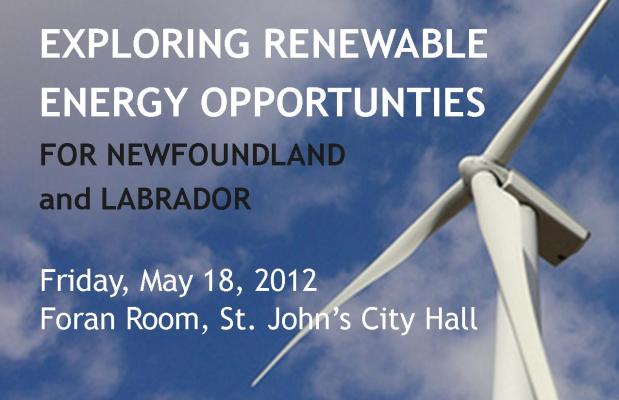
PUBLIC FORUM: EXPLORING RENEWABLE ENERGY OPPORTUNTIES FOR NEWFOUNDLAND & LABRADOR

When: 10:00 am – 12:00 pm, Friday, May 18

Where: Foran Room, St. John’s City Hall, St. John’s, NL

The proposed Muskrat Falls hydro development project has spurred considerable debate about the future of energy production and consumption in our province. This public forum is meant to contribute to this discussion and present information on the opportunities for municipalities, businesses and home owners to become renewable energy producers.


SPEAKERS:

Neal Livingston, Renewable Energy Developer and Policy Advocate (Nova Scotia): The renewable energy opportunity – examining alternatives to large hydro development. Visit www.blackriver.ns.ca for more background.

Councillor Sheilagh O’Leary, City of St. John’s: New wind turbine development regulations for the City of St. John’s

Gerry Skinner, Owner of Newfound Energies – NL-based renewable energy company: Renewable energy installations in Newfoundland and Labrador.  Visitwww.labradorcoastal.com for more background.

Fred Winsor, Sierra Club of Canada (Atlantic Chapter): How could “Feed In Tariff” legislation boost renewable energy generation in Newfoundland and Labrador?

Q & A Session


The public and media are invited to attend.

This event is organized by the Sierra Club of Canada (Atlantic Chapter) and the Newfoundland and Labrador Environment Network.

Facebook event link: http://www.facebook.com/events/353531088034184/ 

Link to live event webcast: http://www.livestream.com/nlen


For further information contact:

Fred Winsor
Sierra Club of Canada (Atlantic Chapter)
winsorf@nl.rogers.com
709-738-3781

Chris Hogan
NL Environment Network
nlen.ed@gmail.com
709-753-7898

MUN Campus Food Strategy Group Coordinator

[UPDATE: THIS POSITION HAS BEEN FILLED!]

This summer – Dig in – to food on campus!

Your opportunity to make a difference: We’re looking for students to work with us for the
summer. All projects will have a real impact on the future of food on campus – expect no
photocopying, paper filing, or coffee fetching in this job!

As a coordinator for the Campus Food Strategy Group, you’ll be getting hands on, field experience
with your campus food supply, from farm to plate. Really! You will meet farmers and food
processors, tour distributors’ warehouses, and work with food service directors and chefs. You’ll be
identifying sources of local and sustainable food, and figuring out how to get them into your campus
cafeterias. You’ll also be working with professors to help set up research courses to continue this work
in the fall, and be networking with students on campuses across the country who are tackling the same
issues on their campuses. You’ll be identifying sources of local and sustainable food for your campus
and you’ll be working with professors to help set up research courses to do similar work in the fall.
You’ll also be networking regularly with students on campuses across the country doing similar work. If
you’re up for a challenge, and want to gain tremendous summer work experience, this is the
opportunity for you!

Coordinators will work from a distance with a team of coordinators on campuses across Canada, and
will be in regular contact with the Campus Food Systems Project staff, located in Ottawa and Toronto.
We are excited to be offering this opportunity to benefit the future of food on your campus’ food
supply, from farm to plate.

For more details about specific projects for the summer, please check out:
http://studentfood.ca/summer-opportunities

Desired Attributes:
· Knowledge of food issues
· Excellent interpersonal, self-management and organizational skills
· Excellent communication skills
· Ability to take initiative and engage in active learning
– Openness to new perspectives and desire to do solutions-focused work with a diverse group of
stakeholders

This position is available immediately – it has been funded by Canada Summer Jobs for 245 hours
(approx. 7 weeks at 35 hrs/wks – adjustable to 10 weeks at 25 hrs/wk). This position is only available
for students who were enrolled full time in the 2011-12 academic year, and also plan to enroll full
time the 2012-13 academic year. Applicants must be Canadian citizens between the ages of 18-30.
Course credits for your work and time may be able to be arranged.

Interested?! Get in touch today with Dana: food@syc-cjs.org, or Caitlin:Caitlin@mealexchange.com

Project Manager (Canadian Environment Network)

EMPLOYMENT / CONTRACT OPPORTUNITY

International Project Manager(s) United Nations Forum on Forests (UNFF)
UNFF Major Group Initiative Forest Workshop
May 2012 – September 2012

Deadline for application: May 9, 12 pm, EDT
Position: International Project Manager(s)
Project: United Nations Forum on Forests (UNFF) — UNFF Major Group Initiative Forest Workshop
Organization: The Canadian Environmental Network (RCEN)
Location: anywhere in Canada (from home or at our office in Ottawa)

Contract dates: May 2012 — September 2012
Deadline: May 9, 2012, 12:00 EDT.

The Canadian Environmental Network (RCEN) is seeking to contract a Project Manager to manage all activities related to the United Nations Forum on Forests (UNFF) Project, “Intensifying Major Groups Involvement in the Implementation of UNFF Decisions,” on behalf of the RCEN. The RCEN is the lead organising NGO for the Project. There is potential for this work to be split into two contracts based on pre- and post-event activities (lead-up work done in Canada and activities done in Brazil and followup).

The UNFF Major Groups (MG) (see: http://www.mgi-forests.org/home) are hosting a preparatory workshop for UNFF 10 (Turkey 2013). The workshop will take place in Teresópolis, Brazil between 13-17 June 2012, at the same time as RIO+20. The theme for the workshop is “Forests and Economic Development: Positioning Forests to Contribute to Green Economy.” The workshop will bring together approximately 100 participants from the Major Groups. The required outcomes are (1) draft recommendations to UNFF 10, (2) draft inputs for MG paper to UNFF 10, and (3) implementation of a side event at RIO+20.

The upcoming Rio+20 Earth Summit will have two major themes: Green Economy; and an Institutional Framework for Sustainable Development. While the Green Economy theme focuses on sustainable development in the context of poverty eradication, the theme of Institutional Framework for Sustainable Development will address global governance issues.

The contract will run from early May through 30 September 2012. The contractor(s) will be under the direction of the RCEN. Contract value up to $20,000, depending upon qualifications.

All applicants please respond to Maggie Paquet, Acting Chair, RCEN at actingchair @rcen.ca*
Deadline: May 9, 2012, 12:00 EDT.

Qualifications:
• Administrative experience, including budgeting and financial record-keeping
• Working knowledge of the RCEN
• Familiarity with forest issues
• Project leadership and coordination
• International experience
• Consensus building ability
• Facilitation experience
• Writing ability
• Ability to act independently, but maintain regular communications with RCEN
• Event management
• Website management

Related tasks include:
1. Administrative — ensure accommodations and travel, coordination of participants travel and accommodation, reporting, budget management.
2. Event Management — determine flow of event, coordinate presenters, liaise with venue to ensure all necessary materials for successful event are on site, transportation for participants to and from hotel to venue.
3. Documents – expected that up to three draft documents (including concrete recommendations for UNFF 10 and inputs for joint Major Groups paper for UNFF 10) are to be produced with input and guidance from the UNFF Major Groups Steering Committee and with oversight by the RCEN.

Other information:
1. Successful candidate will be required to travel to Brazil.
2. Draft documents are required to be completed and submitted by September 15, 2012.

Environmental Educator Summer Student – Ducks Unlimited Canada

Ducks Unlimited Canada (DUC) is seeking an energetic individual for summer employment in Corner Brook, NL.

Duties

The Environmental Educator will work as part of a team to deliver Ducks Unlimited Canada “Project Webfoot” field trips to about 440 grade 4 students and deliver educational activities and events.


Reporting to the Conservation Programs Specialist, responsibilities will include:

• Delivering outdoor field trips

• Facilitating wetland education activities and events

• Compiling teacher feedback

• Preparing final report and recommendations

• Assisting with field work

• Other duties as requested


Qualifications

• Possess valid first aid and CPR training

• Be willing to complete a security clearance

• Have experience working with youth

• Have experience with outdoor education programs

• Possess excellent communication and organization skills

• Have enthusiasm for the outdoors, wildlife and conservation

• Be energetic and love working with children and the public

• Knowledge of wildlife/wetland biology an asset

• Fluency in French an asset

• Must be a youth and student returning to full time studies in fall of 2012


Details

• Term of employment is at least 3 weeks and potentially up to 8 weeks, depending on receipt of additional funding.

• Anticipated start date is May 29, 2012.

• Rate of pay is $12.00/hr based on a 35-hour week.

• Some evening and weekend work and travel may be required.

• Work closely with the Conservation Programs Specialist and the public.


How to Apply

If you are qualified and interested in this opportunity, please submit (email preferred) your cover letter, resumé and the names of three references for confidential consideration by May 10, 2012 to the attention of:


Danielle Fequet

Ducks Unlimited Canada

c/o CBPP Woodlands Department

P.O. Box 2001, Corner Brook, NL

A2H 6J4

Fax: 709-637-3469

Email: d_fequet@ducks.ca


Ducks Unlimited Canada (DUC) is the leader in wetland conservation. A registered charity, DUC partners with government, industry, non-profit organizations and landowners to conserve wetlands that are critical to waterfowl, wildlife and the environment.


While DUC would like to thank all applicants, only those considered for an interview will be contacted.


Join the PowerShift organizing team as a Volunteer Coordinator!

JOIN THE POWERSHIFT ORGANIZING TEAM AS A VOLUNTEER COORDINATOR!

Volunteer Position: National Volunteer Coordinator(s)
Location: Across Canada
Duration: 10 hrs/week from May-October, increasing as we get closer to Powershift
Closing date for applications: May 11, 2012

Powershift Canada is a gathering for and by youth that will bring 1500 people from diverse backgrounds together to build a movement for climate and environmental justice. It will be taking place from October 26th to October 29th in Ottawa and will look at the intersections between environmental and social justice issues, build skills for collective action, and be a space for engaged youth to network and learn from each other.

If you want to be a part of building a Canadian climate justice movement, this is an incredible opportunity for youth from across the country to come together, mobilize, and learn, to ultimately go back to their own communities and affect change.

We’re well into the organizing process and looking for a few enthusiastic and organized individuals from across the country to coordinate our volunteers.

Your responsibilities will include:

  • refining our volunteer engagement strategy;
  • working with working group bottomliners to identify gaps and needs;
  • recruiting volunteers with specific skillsets to fill gaps and needs in the organizing process;
  • working with working group bottomliners to orient new volunteers;
  • developing materials and trainings to support volunteers.


If you:

  • are able to work on a team and to work independently;
  • are approachable, enthusiastic, supportive, patient with others;
  • are comfortable delegating and sharing responsibility;
  • are able to deal with ambiguity and effectively cope with changing situations;
  • are a clear communicator who can maintain dialogue with others about their needs;
  • have a good understanding of group dynamics;
  • have excellent interpersonal skills;
  • have previous experience working with youth between the ages of 15-30;
  • have proven skills in recruiting, engaging, and organizing volunteers;
  • have a demonstrated commitment to climate justice,


Then we’d love for you to apply to coordinate volunteers at Powershift Canada!

Powershift Canada welcomes the contributions that individuals from marginalized communities bring to our organization, and invites Indigenous/First Nations people, people of colour, women, gays, lesbians, bisexuals, queer-oriented people, transgendered/gender-variant people, single parents, members of ethnic minorities, immigrants and people with disabilities to apply.

For more information: Contact Amara or Tasha at powershift.vol@gmail.com.

To apply: Send 300 words, describing why you would like to coordinate volunteers and what skills and experience you bring to the position, to powershift.vol@gmail.com by Friday, May 11 2012.