Office and Outreach Coordinator (Northeast Avalon ACAP)

Northeast Avalon ACAP, Inc. is hiring an Office and Outreach Coordinator

NAACAP is seeking an energetic coordinator to assist in the day-to-day operations of a regional non-profit, community-based environmental organization and to implement its public engagement activities. The successful candidate will report to, receive direction from, and facilitate the decision-making of a volunteer Board of Directors. The Coordinator will play a pivotal role in carrying out NAACAP’s 2012-13 project commitments which include the mounting of a regional watershed stewardship workshop in February 2013, as well as planning 2013-14 projects and preparing project proposals

Primary duties are as follows:


  • Implementing projects and associated communications plans in keeping with Board and/or Committee direction
  • Liaising with project partners and community members
  • Maintaining financial, administrative and reporting systems


Qualifications desired:

  • University Degree in related area (i.e. Geography, Business Administration, Biology, Environmental Science) or equivalent combination of education and experience;
  • Experience in planning and delivering workshops and other public events;
  • Experience in project application and report writing;
  • Experience working with volunteers;
  • Strong written and oral communication skills;
  • Strong research and facilitation skills;
  • Working knowledge of a variety of PC computer applications. Preference will be given to candidates with demonstrated expertise in bookkeeping, GIS, HTML and/or similarly specialized computing functions.
  • Priority will be given to candidates eligible for Graduate Employment Program funding. Candidates eligible for this funding will have graduated from a post secondary institution in the last 2 years and be unemployed or under employed and preferably non EI eligible.


This is a contractual position to 31 April 2013 with the possibility of renewal subject to satisfactory performance and adequate funding.


Salary: 32,000- 34,500/annum equivalent (~$17-$19/hr)


Candidates are asked to submit a detailed resume, a cover letter highlighting their relevant qualifications and experience, and provide contact information for two (2) individuals familiar with their work and accomplishments to date. Applicants selected for an interview will be asked to provide samples of their written work.


Please direct questions and applications to:   careers@naacap.ca


Deadline: 4:00 p.m. Monday September 24th 2012


Internship positions (2): Research Assistant and Field and Outreach Intern

Conservation Corps of Newfoundland and Labrador is a non-profit organization with a mandate to provide young people with meaningful work, training and educational opportunities in the areas of environmental and cultural heritage conservation and enhancement. Conservation Corps is now accepting applications for the following two internship positions.


Research Assistant (1 position)

In partnership with Canadian Parks and Wilderness Society – Newfoundland and Labrador Chapter (CPAWS – NL) with Corporate Support from Chevron Canada Ltd.:

CPAWS NL has been actively involved with various seabird projects throughout the Southern Shore; which include the Adopt a Beach Program, Puffin and Petrel Patrol Program, Purple Sandpiper Studies and Seabird Education. The intern will be responsible to continue with these programs as well aid in the research of methods to reduce light attraction of puffins and how to promote effectively to local residents. Intern duties may also involve assisting with an anticipated project with Parks Canada on human interaction within the National parks with bears. Furthermore, intern will assist staff with a National Geographic map guide project promoting sustainable tourism as well as other marine related projects. Candidates for this position should have a demonstrated interest in wildlife and the environment; experience in public education and outreach and program delivery considered an asset. Position primarily based in St. John’s but will include some travel to communities along the Southern Shore.


Field and Outreach Intern (1 position)

In partnership with Northeast Avalon Atlantic Coastal Action Program (NAACAP) with Corporate Support from Chevron Canada Ltd.:

Intern will be assisting NAACAP’S Environmental Technologist and Office and Outreach Co-ordinator with NAACAP’s project “Sustaining Watersheds”. This project aims to gather baseline data on the state of the Waterford River. The project has physical and social components; the Intern would collect physical data (water quality parameters, flow rates, pollution sources, etc.) and also help with outreach, networking, and event co-ordination. The Intern will play a role in organizing a bank stabilization demonstration project, and produce an information brochure based on the information gathered for this project. Candidates for this position should have a demonstrated interest in water conservation issues; strong verbal and interpersonal communication skills; event coordination and data collection would be considered an asset. Valid driver’s license and access to own vehicle with appropriate insurance considered an asset. Position based in St. John’s.


Salary for the above positions is $13.00 per hour for 35 hours per week for 12 weeks. CCNL is a youth serving not-for-profit, therefore individuals must be between the ages of 15 and 30.


Please apply with cover letter, resume and three references. The same application can be used to apply for more than one Intern placement. Please indicate clearly in your cover letter which Intern placements you are applying (if applying via email please indicate position in email subject title). For more information on Conservation Corps Newfoundland and Labrador please visit www.ccnl.ca


Application Deadline is Monday, September 24th, 2012.

Applications should be forwarded to:

Selection Committee, Conservation Corps Newfoundland & Labrador

Suite 103, 10 Austin Street

St. John’s NL, A1B 4C2

Tel: (709) 729-7266

Fax: (709) 729-7270

Email: applications@ccnl.ca

Environment Canada Consultation: Seeking Views on 2020 Biodiversity

(The Canadian Environment Network was asked to distribute info on this consultation on behalf of Environment Canada)

For more than 15 years, federal, provincial and territorial governments have demonstrated their commitment to conserving biodiversity and ensuring its sustainable use by implementing the Canadian Biodiversity Strategy and the Biodiversity Outcomes Framework. In October 2010, Canada and other Parties to the Convention on Biological Diversity agreed to develop national targets in response to the Conventions Strategic Plan for 2011-2020. The Strategic Plan is a globally aspirational, flexible framework of goals and targets. Canada is developing its own national biodiversity goals and targets using the Strategic Plan as a guide.

Over the past several months, federal, provincial and territorial governments have been working together to draft biodiversity goals and targets for Canada. On their behalf, Environment Canada is seeking views on the draft goals and targets.

The attached document provides details on the content of the proposed biodiversity goals and targets, as well as the context for their development. You are invited to provide your input by completing, by August 29th, an online questionnaire that can be accessed by clicking here (the questions from the on-line questionnaire are copied below).

The contribution of Aboriginal communities, businesses, cities, schools, research institutes, non-government organizations and individual Canadians is essential to achieving the proposed national biodiversity goals and targets, and to ensuring that they are relevant for Canada. Please feel free to share this invitation with anyone who may be interested.

Additional context and information on the proposed 2020 biodiversity goals and targets for Canada will be provided via an online presentation and simultaneous conference call. Participants will have an opportunity to submit written questions during the session using their keyboards. Registration is required in order to participate in the sessions. To register please click one of the following links. After registering you will receive an email containing instructions to join the simultaneous web presentation and teleconference.


French Session, Monday, August  20th from 11:00 AM to 12:00 PM (EDT)

English Session, Monday, August 20th from 1:00 to 2:00 PM (EDT)


The slides for the presentation that will be made during these sessions are available at English: http://rcen.us4.list-manage.com/track/click?u=4f30a33a38358c0aaaa4a4734&id=77d62b46f1&e=3a1ba3372a


Thank you in advance for your participation.


Best regards,


Robert McLean

Executive Director

Wildlife Program Policy

Canadian Wildlife Service

Environmental Stewardship Branch

Environment Canada

Government of Canada

Website www.ec.gc.ca


—-


Questions from on-line questionnaire


A.      Goals and targets


1.       Do the proposed goals and targets adequately reflect the most important priorities and opportunities on which Canada should act to conserve biodiversity?


2.       Do these proposed targets meet the criteria of being ambitious but achievable?


B.      Actions to support implementation


3.       Are you answering this questionnaire as an individual or the representative of an organization? Please provide your contact information.


4.       Of the draft goals and targets identified above, which are most relevant to your organization?


5.       How might your organization be able to contribute to achieving these goals and targets?


6.       Would you like to remain informed about the development of the 2020 biodiversity goals and targets for Canada, for example in the identification of indicators and reporting on progress?


Pendant plus de 15 ans, les gouvernements fdral, provinciaux et territoriaux ont dmontr leur engagement envers la conservation de la biodiversit et lassurance de son utilisation durable en mettant en uvre la Stratgie canadienne de la biodiversit et le Cadre ax sur les rsultats en matire de biodiversit. En octobre 2010, le Canada et les autres Parties  la Convention sur la diversit biologique ont convenu de dvelopper des objectifs nationaux en rponse au Plan stratgique 2011-2020 de la Convention. Le Plan stratgique est un cadre mondial ambitieux et souple de buts et dobjectifs. Le Canada saffaire  dvelopper ses propres buts et objectifs pour la biodiversit qui sont pertinents au niveau national, en utilisant le Plan stratgique comme un guide.


Depuis plusieurs mois, les reprsentants des gouvernements fdral, provinciaux et territoriaux ont travaill ensemble  laborer une version prliminaire de buts et dobjectifs canadiens pour la biodiversit. En leur nom, Environnement Canada sollicite de points de vue sur cette version prliminaire des buts et objectifs.


Le document ci-joint fournit des dtails sur le contenu de la version prliminaire propose des buts et objectifs pour la biodiversit, ainsi que sur le contexte de son laboration. Nous vous invitons  fournir vos commentaires en compltant,  dici le 29 aot, un questionnaire en ligne auquel on peut accder en cliquant ici (les questions du questionnaire en ligne sont copies ci-dessous).


La contribution des collectivits autochtones, des entreprises, des villes, des coles, des instituts de recherche, des organisations non-gouvernementales et des Canadiens est essentielle  latteinte des buts et objectifs proposs, et pour assurer quils sont pertinents pour le Canada. Nhsitez pas  partager cette invitation avec quiconque pouvant tre intress.


Plus ample contexte et des informations additionnelles sur lbauche propose des buts et objectifs pour la biodiversit dici 2020 seront fournis par une prsentation en ligne avec une tlconfrence simultane. Les participants auront loccasion de soumettre des questions crites au cours de la session en utilisant leurs claviers dordinateur. Linscription est obligatoire pour assister aux sessions. Pour vous inscrire, sil vous plait cliquer sur un des liens suivants. Aprs votre inscription, vous recevrez un courriel avec les instructions pour se joindre    la tlconfrence et la prsentation en ligne.


Sance en franais, lundi le 20 aot, de 11h  12h (HAE)

Sance en anglais, lundi le 20 aot, de 13h  14h (HAE)


Les actates de la prsentation qui sera faite au cours des sessions sont disponibles en franais: http://rcen.us4.list-manage.com/track/click?u=4f30a33a38358c0aaaa4a4734&id=a016ae0b1b&e=3a1ba3372a


—-

Questions du questionnaire en ligne


A.      Buts et objectifs


1.       Les buts et objectifs canadiens proposs reprsentent-ils les priorits et opportunits les plus importantes sur lesquelles le Canada devrait miser pour conserver la biodiversit?


2.       Les objectifs proposs sont-ils   ambitieux mais ralisable ?


B.      Mesures prises pour appuyer la mise en uvre


3.       Rpondez-vous  ce questionnaire en tant quindividu ou en tant que reprsentant dune organisation? Veuillez sil vous plat fournir vos coordonnes.


4.       Parmi les buts et objectifs numrs plus haut, lesquels sont les plus pertinents pour votre organisation?


5.       De quelle faon votre organisation pourra-t-elle contribuer  atteindre ces buts et objectifs?


6.       Aimeriez-vous demeurer inform du dveloppement des buts et objectifs canadiens pour la biodiversit dici 2020, par exemple pour lidentification des indicateurs ou pour faire rapport sur les progrs accomplis?

==============================================

Environmental Educator

The Brother Brennan Environmental Education Centre is looking for an enthusiastic and energetic person to help deliver their fall environmental education programs. Experience working with children and a knowledge of Newfoundland’s nature are an asset. A valid first-aid certificate and police record check are needed and own transport is preferred. There will normally be 24 or 48 hours work each week at $14 hour. For more information go to www.brotherbrennancentre.ca

Please email a resume and cover letter to helenspencer@esdnl.ca by Thursday September 6, 2012

Join the Great Canadian Shoreline Cleanup this September

Join the Great Canadian Shoreline Cleanup this September

No Matter How it Comes, Litter Puts us at Risk


What do a payphone, wedding dress, and false teeth all have in common? These unusual items, along with plastic bags, bottle caps, and other debris were all found on Canadian shorelines! To make our rivers and lakes cleaner and healthier for everyone, the Vancouver Aquarium and WWF are asking you to sign up for the Great Canadian Shoreline Cleanup, presented by Loblaw Companies Limited.

No matter what form it comes in, shoreline litter puts wildlife and people at risk. The Great Canadian Shoreline Cleanup is a great opportunity for Canadians to get outside and transform their community into a litter-free environment.  A few hours removing litter from your favourite shoreline really can make a difference.

Our program runs from September 15-23rd, 2012, sign up today.

Last year, the Great Canadian Shoreline Cleanup cleared more than one hundred forty-three thousand kilograms of litter – the approximate weight of seventy-two Steller sea lions – from over three thousand kilometers of shorelines. This year, we’re hoping to accomplish even more.

Register today at ShorelineCleanup.ca


Sign up to organize in your community: Help bring PowerShift and build the climate movement in NL

Power Shift 2012 aims to build an environmental and climate justice movement that can transform our society, so that our future can be enjoyed by everyone, not only those who can afford it. Power Shift is organized by youth for youth and aims to mobilize passionate youth from affected communities and various sectors of civil society  to explore multiple  ways of taking action and work to develop each other’s capacity and abilities.

To make PowerShift 2012 a success, we need dedicated, passionate leaders from across the country to act as Local or Regional Outreach Coordinators. You could volunteer for being an outreach coordinator for a region (i.e. Newfoundland  or Labrador) or for a city, town, campus or other community (i.e. your university campus or the city of Halifax). If you join our team of coordinators you will become part of a diverse team of volunteers working to organize PowerShift 2012 and bring people to Ottawa from every corner of Canada. As a coordinator you will spread the word about PowerShift 2012 and recruit young people from your community or region to attend. This will involve connecting with and supporting local organizations and groups in your community or region that are interested in climate justice and helping to facilitate the participation of youth from your community or region in PowerShift 2012.

As a Local or Regional Outreach Coordinator, you won’t be working alone – there will be a Regional Volunteer Coordinator in your region (Western Canada, Central Canada, Eastern Canada and Francophone) to support you. They will provide you with any additional support you may need including when contacting local organizations, asking for assistance or fundraising. As a Local or Regional Outreach Coordinator, you will also be supported by the PowerShift 2012 organizing committee, made up of 8 working groups and over 60 volunteers.

What will you get out of the experience? You’ll get to know movers and shakers in your community and region, build useful organizing skills, create relationships with other passionate youth, and contribute to building a national climate justice movement.

If this dynamic and diverse opportunity sounds like something you want to take on, please fill out this form so we can get to know you a little bit. If you have any questions, please email powershift.vol@gmail.com

Powershift 2012 welcomes the contributions that individuals from marginalized communities bring to our organization, and invites Indigenous/First Nations people, people of colour, women, gays, lesbians, bisexuals, queer-oriented people, transgendered/gender-variant people, single parents, members of ethnic minorities, immigrants and people with disabilities to apply.


Pesticide Alert – Roadside Herbicide Spraying, a Danger to Human Health and the Environment

Pesticide Alert – Roadside Herbicide Spraying, a Danger to Human Health and the Environment

Photo: Flickr.com/tom cochrane

The Coalition for Alternatives to Pesticides, Newfoundland and Labrador (CAP-NL) is alerting the general public to the risk of exposure to toxic pesticide being used to remove vegetation along roadsides throughout the province. The Pesticides Control Section of the Department of the Environment and Conservation, Government of Newfoundland and Labrador, has announced extensive roadside spraying of the herbicide Tordon 101 which has the chemical 2, 4-D as an active ingredient. The manufacturer of this product has issued warnings and precautions pertaining to this pesticide as follows:


Cautions:

MAY CAUSE SKIN AND EYE IRRITATION

HARMFUL IF SWALLOWED

MAY BE HARMFUL IF ABSORBED THROUGH SKIN

DO NOT GET IN EYES

AVOID CONTACT WITH EYES, SKIN AND CLOTHING

AVOID BREATHING SPRAY MIST

DO NOT INHALE FUMES


Precautions:

KEEP OUT OF REACH OF CHILDREN

MAY CAUSE SKIN AND EYE IRRITATION

HARMFUL IF SWALLOWED

MAY BE HARMFUL IF ABSORBED THROUGH SKIN

DO NOT GET IN EYES

AVOID CONTACT WITH EYES, SKIN AND CLOTHING

AVOID BREATHING SPRAY MIST

DO NOT INHALE FUMES


The provincial government in July of this year announced “that 2,4-D (2,4-dichlorophenoxyacetic acid),will no longer be permitted for application on lawns.”

Dr . Ian Simpson, Co-Chair of CAP-NL says that his organization is pleased that the provincial government announced the banning of pesticides with the active ingredient 2,4-D for use on lawns. However he is alarmed at the contradictory increase in the use of the 2, 4-D pesticide, Tordon 101 along our roadways. Dr. Simpson references that on June 19, 2012 the Ontario College of Family Physicians (OCFP) strongly recommended that the public reduce their exposure to pesticides wherever possible, based on the findings of its second comprehensive review of research on the effects of pesticides on human health. The review showed associations between pesticide exposure and various neurological and respiratory diseases, as well as reproductive problems. Covering 142 studies, the review also demonstrates that children are particularly vulnerable to pesticide exposures that occur during pregnancy.

The Coalition for Alternatives to Pesticides (CAP-NL) is a provincial coalition of health and environmental organizations and citizens who are concerned about the risks posed by the use of pesticides to the health of children, adults, animals, and the environment. The Coalition is advising the general public to keep their windows closed when driving in areas where toxic pesticides are being used along our roadways and not to engage in any recreational activities in these areas such as berry picking, fishing and camping where there is danger of exposure to the pesticides.

A pesticide is anything that is used to control or destroy a pest. Pesticides used to kill insects are known as insecticides, those used to kill weeds are called herbicides, those used to kill rodents are called rodenticides, and those used to kill fungi are called fungicides.

CAP-NL is urging the provincial government to be consistent in their pesticides policy and alternatively use more environmentally sustainable and less health threatening means of vegetation management along roadways. The Coalition suggests establishing more environmentally sustainable vegetation bordering roadways that requires less maintenance by manual physical treatment.


For further information please contact:

Dr. Ian Simpson, Co- Chair CAP-NL (Contact Information)


Link to petition “Please stop poisoning our province”:

http://sprayadvisory.blogspot.ca/2012/07/persistent-toxic-pesticides-to-be.html


Appendix:


PUBLIC NOTICE


#1

Please be advised that weather permitting Newfoundland and Labrador Vegetation Control will commence an Herbicide Spray Program for WST starting August 2, 2012


Route 1 TCH

Adeytown – Clarenville,

Bonavista underpass to Port Blandford Route 210

TCH at Goobies to North Hr. Intersection.

The products that will be used in this spray program are Tordon 101 Reg# 9007.

Any questions or concerns please contact NLVC Office @  (709) 673-5898, 8 am – 5 pm Monday to Friday, or Fax us @  (709) 673-5899, or Pesticide Control Section @ 1 800 563-6181.


#2

Please be advised that weather permitting Newfoundland and Labrador Vegetation Control will commence an Herbicide Spray Program for WST, starting July 30, 2012.


Botwood Highway Route 350

Bay D’Espoir Highway Route360

Route 1 TCH GrandfallsWindsor – Badger

Botwood Airport and Road

The products that will be used in this spray program are Tordon 101 Reg# 9007.

Any questions or concerns please contact NLVC Office @ (709) 673-5898, 8am – 5 pm Monday to Friday, or Fax us @ (709) 673-5899, or Pesticide Control Section @ 1-800 563-6181.


#3

Please be advised that weather permitting, Newfoundland and Labrador Vegetation Control will commence a Herbicide Spray Program for WST, starting July 30, 2012.


Route 1 TCH

Birchy Narrows to McIsaacs Brook

North Branch River – McDougall Brook

Burgeo Road Intersection to Route 490 Intersection

Route 490 Intersection to 461 Intersection

Route 401 towards Howley , off TCH

Route 420 Clam Pond Road to Taylors Brook Road

St. Andrews Airstrip

The products that will be used in this spray program are Tordon 101 Reg # 9007.

Any questions or concerns please contact: NLVC Office @  (709) 673-5898, 8 a.m. – 5 p.m. Monday to Friday, or Fax us @  (709) 673-5899, or Pesticide Control Section @ 1 800 563-6181.


#4

Please be advised that weather permitting Newfoundland and Labrador Vegetation Control will commence an Herbicide Spray Program starting July 9,2012.


Route 100 Argentia Access Rd. at TCH to approx. 300m West of Route 101 to Long Harbour.

Route 92 at North Hr. Interection to Branch

Route 100 South of Pointe Verde to South of Ship Cove

The products that will be used in this spray program are Tordon 101 Reg# 9007, Garlon XRT, PCP # 28945.


Any questions or concerns please contact NLVC Office @ (709) 673-5898, 8am – 5 pm Monday to Friday, or Fax us @ (709) 673-5899, or Pesticide Control Section @ 1 800 563-6181 .


#5

Please be advised that weather permitting Newfoundland and Labrador Vegetation Control will commence an Herbicide Spray Program for WST starting July 30, 2012


Route 1 TCH Foxtrap, Paddy’s Pond to Butterpot Park

Route75 Veteran’s Memorial Highway from TCH to North River

Route10 Southern Shore Highway from CapeBroyle to Renews – Cappahayden

Route 63 Avondale Access Rd. from TCH towardsRoute 60

Route 13 Witless Bay Line from km 13 to TCH

Route 101 – Long Hr. Road from Route 100 intersection to Route 202 Intersection

The products that will be used in this spray program are Tordon 101 Reg# 9007.

Any questions or concerns please contact NLVC Office@  (709) 673-5898, 8am – 5 pm Monday to Friday, or Fax us @ (709) 673-5899, or Pesticide Control Section @ 1-800 563-6181.


NLVC will be in the following areas The week of July 30,2012 to August 11,2012……

NL Power Gander to GFW (136 L – 102 L)

Tordon 101 reg# 9007

Sylgard


5ha for test plot (Dupont Navius Herbicide)


WST Roadside Spray


Avalon Route 1 TCH Fox Paddy’s Pond to Butterpot Park

Avalon Route75 Veteran’s Memorial Highway from TCH to North River

Avalon Route 10 Southern Shore Highway from Cape Broyle to Renews Cappahayden

Avalon Route 101 Long Harbour Rd. from Route 100 Int. to Route 202 Int.

Avalon Route 63 Avondale Acess Road from TCH interchange toward R60

Avalon Route 13 Witless Bay Line from km 13.4 from TCH interchange to Route 10 Int.

Eastern route 1 TCH from 1.7 km East of Adeytown to Clarenville

Eastern Route 1 Bonavista Peninsula Underpass to first Intersection to Port Blandford

Eastern Route 210 TCH at Goobies to North Harbour Intersection

Central Route 350 Botwood Highway km 12 – km 19

Central Route 360 Bay D’Espoir Highway km 49 – km 60

Central Route 360 Bay D’Espoir Highway km 80 – km 84

Central Route 360 Bay D’Espoir Highway km 113 – km 125.4

Parks facing growing threats to their ecological health: CPAWS’ 2012 State of Canada’s Parks Report

Parks facing growing threats to their ecological health: CPAWS’ 2012 State of Canada’s Parks Report

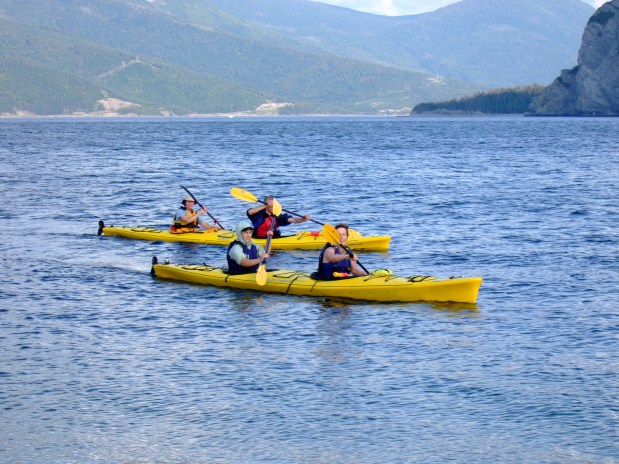
Kayaking in Bonne Bay, Gros Morne National Park. CPAWS’ report points to threat of offshore oil and gas development in Gros Morne National Park.  Photo: Flickr.com/David Ooms

Ottawa–  In the run-up to Canada Parks Day on the 3rd Saturday in July, the Canadian Parks and Wilderness Society (CPAWS) released a sobering report  about the growing threats our parks are facing. The report highlights the dangers to our parks due to funding cuts; the loss of science and ecological monitoring capacity; and the growth of inappropriate developments within and adjacent to many current and proposed parks.

“In Newfoundland and Labrador, this discouraging trend is in strong evidence. We have lost valuable staff in both our national and provincial parks, and hours are currently being reduced” expressed Co-Executive Director Suzanne Dooley, CPAWS NL.

“Across the country, the trend is extremely discouraging this year. Parks Canada has been hit hard by funding cuts, leading to the elimination of 638 positions across the country. In turn this means that nearly 30% of the scientists and technicians restoring and monitoring the ecological health of our parks have been fired or reassigned.  The cuts also mean many parks are cutting their seasons shorter, opening the door to inappropriate use of them with no supervision,” says CPAWS National Executive Director Eric Hebert-Daly.

“Not only are our parks facing growing threats to their ecological health from the funding cuts, the tourism community and nearby communities are also facing economic harm.  The government’s own research shows that for every $1 spent on parks, $5 is contributed toCanada’s gross domestic product. Why isn’t the government recognizing the important benefits that result from investing in our parks?” adds Hebert-Daly.

Challenges facing Newfoundland and Labrador’s parks

“In Newfoundland and Labrador , we are very concerned cutbacks and layoffs to staff will have a huge impact on the ecological integrity of the parks as well as the effects that it will have for the visitor experience and local communities,” says Dooley.

CPAWS has been issuing an annual report on the state ofCanada’s parks since 2008. The first report lauded the rate of new parks creation by the federal government that year. Subsequent reports noted the slowdown in parks creation, the need to increase the number of marine protected areas, and some inappropriate developments that were starting to be noted.

-30-

Download Report: The State of Canada’s Parks – 2012 Report (CPAWS)

For interviews, contact:

Suzanne Dooley, (709)726-5800 or sdooley@cpaws.org or

Tanya Edwards tedwards@cpaws.org

 CPAWS NL website: www.cpawsnl.org


CPAWS is Canada’s voice for wilderness. Since 1963 we’ve led in creating over two-thirds of Canada’s protected areas. That amounts to about half a million square kilometres – an area bigger than the entire Yukon Territory! Our vision is that Canada will protect at least half of our public land and water. As a national charity with 13 chapters, 55,000 supporters and hundreds of volunteers, CPAWS works collaboratively with governments, local communities, industry and indigenous peoples to protect our country’s amazing natural places.


Looking for facilitators and presenters impacted by climate injustice and/or working for social change (APPLY BY JULY 15, 2012)

We Want YOU to be a facilitator, speaker, and/or presenter at PowerShift 2012 in Ottawa.

We are contacting you to join us in educating, training and mobilizing our generation in the fight for climate justice. We are currently seeking panelists, speakers, workshop facilitators, and caucus facilitators for PowerShift 2012.  Scroll to bottom for direct links to application forms.

What is PowerShift?

From October 26-29, PowerShift 2012 Canada will bring 1500 youth (age 18-30) from diverse backgrounds together in Ottawa to build a movement for climate and environmental justice.

Through keynote speakers, workshops, caucuses, panel discussions, actions, and many other activities, participants will develop their understanding about the intersections between environmental and social justice issues, and build a range of skills for taking action, and gain the connections and confidence to mobilize in their communities.  For more information on PowerShift, visit our website at wearepowershift.ca.

If you are interested in attending PowerShift, and whether or not you intend to apply as a facilitator or speaker, you can follow us on our websitetwitter, and facebook. Registration will be opening in late July.

If you are interesting in participating in PowerShift programming in another way that is not described below (ie. entertainment, art project, etc.) please email powershift.programming@gmail.com.

Why do we need you?

Your skills and experience could contribute to making PowerShift 2012 an engaging and effective learning, training, and networking opportunity. We are particularly looking for speakers and facilitators living on the frontlines of fossil fuel extraction and other climate injustices, folks from underrepresented communities, people with successful campaigning experience, and/or youth who are dedicated and ready to learn!  While PowerShift itself is focused on youth, we are not exclusively looking for youth speakers, presenters, and facilitators, and instead want to encourage intergenerational learning.

How do I sign-up?

We encourage anyone who is interested in sharing their skills, experience, or story to apply to speak or facilitate at PowerShift.  Much of the framework for our programming has already been created through consultations with dedicated volunteers and other community members, so we are mostly looking for speakers and facilitators who can offer workshops or presentations within what we are looking for.  That being said, PowerShift is going to be a huge gathering and we are looking for an incredibly broad range of different things!  Also, if you have something to offer that falls completely outside of the framework we are looking at, while it is less likely to get chosen for this particular event, it will definitely still be considered.

Below (scroll down) we describe the four different types of sessions we are looking for speakers and facilitators for – Skills-based workshops, speakers and panelists (both for “frontline” and “digging deeper”, issues-based panels), Issues-based workshops, and Caucuses (for caucuses we encourage suggestions from people who would prefer not to facilitate themselves as well).  Each of the four session types has a separate form for prospective facilitators and speakers to fill-out that can be found below.  The form shouldn’t take more than 20 minutes to fill out.  If interested, you are encouraged to apply for multiple session types or workshops / topics in the same type.  Please fill out a separate form for each application (with the exception of the speaker / panelist form, where you can list all topics you are comfortable speaking on).

Also, we have a minimal budget; however, we are willing to work with chosen speakers and facilitators who need help with funding their transportation.  Small honorariums will also be available for presenters and facilitators depending on need.

We are looking forward to your application(s)!


Skill-Based Workshop Facilitators:

Skill-based workshops will give participants the skills and confidence to step into new roles as strategizers, trainers, spokespeople, advocates, educators, media liaisons, action organizer, facilitators, and more. The skill-based workshops will also develop participants understanding of strategy, creative action, anti-oppression, and democratic and horizontal organizing. Here is a list of many of the workshops we are particularly looking for facilitators for (this list is by no means exhaustive).


We are looking for people with experience facilitating workshops related to social action skills or people with extensive experience with the particular skill itself who are willing to dedicate some time into planning an effective workshop. To be accepted, workshops must be engaging, accessible, and develop skills relevant to the vision of PowerShift.


If you are interested in facilitating a skills-based workshop please fill out this form.


Speakers and Panelists:

At PowerShift 2012 participants will learn more about issues facing our generation through engaging panels.

There will be “Frontline” panel discussions about the impacts of climate change and toxic development on communities that are directly impacted, as well as on how these communities and their allies are mobilizing in response. The panelists for these will come from communities directly impacted by climate change and/or toxic development.  Here is a list of “frontline” panel topics we are particularly looking for speakers for (this list is by no means exhaustive).

There will also be “Digging Deeper” panels will look at how different issues link and overlap with climate justice, current science and policy, real solutions to the climate crisis, and/or how we can mobilize internationally, nationally, and in our communities to make these solutions a reality. Here is a list of “digging deeper” panel topics we are particularly looking for speakers for (this list is by no means exhaustive).


Fill out this form if you are interested in speaking on a panel at PowerShift 2012.


Issue-Based Workshop Facilitators:

While most content related to specific issues will be delivered through panels, there will be some opportunities for issue-based workshops where participants will dig deeper into issues facing our generation (ie. climate change and agriculture or climate and migrant justice). Here is a list of issue-based workshop topics we are particularly looking for facilitators for (this list is by no means exhaustive).


If you are interested in facilitating an issue-based workshop please fill out this form.


Caucuses:

Caucuses are facilitated discussions or meet-ups based on particular topics, questions or identities. For example, Racialized Participant caucus; Safe(r) Spaces: Accountability and addressing violence in our movements caucus; LGBTQ+ meet and greet. We want to hear from what what caucuses you want to see at PowerShift 2012. Here is a list, that is by no means exhaustive, of some of the caucus ideas that the PowerShift programming team had.  For caucuses in particular, we encourage you to submit any other ideas that you have for caucuses (meaning caucuses that you would be interested in attending), whether they are on our list or not.

This form will let you indicate a caucus that you want to see at PowerShift 2012 and will let you indicate if you want to facilitate the caucus.

Links to all forms:

Skill-based workshops – http://tiny.cc/9hfyfw

Panelists and speakers – http://tiny.cc/6bfyfw

Issue-based workshops – http://tiny.cc/19eyfw

Caucuses – http://tiny.cc/fdfyfw


We look forward to working with you. PLEASE SHARE THIS CALL-OUT WIDELY.

Sustaining Canada's Marine Biodiversity, Fisheries and Communities

Sustaining Canada's Marine Biodiversity, Fisheries and Communities

flickr.com/dragonwoman

Ray Johnson of the citizens group Community Linkages and Fred Winsor of the grass roots organization Sierra Club of Canada, today called upon the United Nations General Assembly and the Food and Agriculture Organization to request that Canada adhere to the precautionary approach, the protection and rebuilding of ocean biodiversity, and sustainable fisheries principles it signed under the November 2006 United Nations Sustainable Fisheries Resolution.

“Despite 20 years of a groundfish moratorium, Canada’s policy towards its oceans and commercial fisheries has failed to change its fisheries management practices and implement a recovery strategy. None of our traditional fisheries have recovered”, stated Chairman Johnson.

“As a consequence of the 1992 Cod Moratorium, the Province of Newfoundland and Labrador witnessed an emptying of its coastal communities. Over 60,000 people were forced to resettle to seek employment. Other provinces such as Nova Scotia, Prince Edward Island, New Brunswick, Quebec, and British Columbia also witnessed extensive outmigration’s from their coastal communities because of industrial overfishing combined with completely inadequate management practices”, said Fred Winsor.

Winsor cites, ”International organizations such as the World Economic Forum have rated Canada’s fisheries and oceans management policies as one of the worst in the world. Canada continues to use unsustainable management practices as more species under its control are either decimated or destroyed”.

“Newfoundland and Labrador is now witnessing the same impacts on other fish species. Meanwhile, other countries continue to fish and use no-take or no-fishing zones to restore the ocean’s natural systems. They enjoy the benefits of sustainable management as the ocean areas under their care recovers and their traditional commercial stocks rebuild. We can do the same here. Let us build a fishery that can be sustainable for the next 500 years”, stated Johnson.

“Unfortunately, efforts to rebuild ocean biodiversity have been met with political and bureaucratic indifference and interference as the public participation has been disbanded and the Ocean’s Act remains mainly unused”, noted Winsor.

“Canada has lost its way when it comes to renewable resources, which can provide food needed to support our human population for generations to come. Canada has the capacity to foster long-term sustainability by making adjustments and following agreements it has signed to support and promote long-term sustainability of our oceans and fish stocks”, stated Winsor.

“We believe that the people of our coastal communities are central to finding solutions to develop a responsible, sustainable future for our fishing industry. Rural communities bring detailed knowledge of local marine environments, fishing practices, political structures, and social motivation. For instance, the Fogo Island Coop is the greatest example of how community and fishery stakeholders can cooperate to successfully manage and operate a fishery”, noted Johnson.

Both groups are encouraging coastal communities around the globe to join them as they move forward to pursue the goal of making inshore commercial fisheries and coastal communities sustainable again. They indicate they are in this for the long haul, for present and future generations, that together people can make a real difference and be the change they desire.

“Write a letter and make our case. By so doing the least we can say is that when democracy returns to the halls of power our case will be on file, and when the current regime comes to an end, our pleas might be seen as deserving of careful consideration”, stated Bud Davidge, a Newfoundland and Labrador Music Artist.


Documents: 

Letter to United Nations General Assembly, June 25, 2012

Report in Brief: The Royal Society of Canada Expert Panel — Sustaining Canada’s Marine Biodiversity: Responding to the Challenges Posed by Climate Change, Fisheries, and Aquaculture (February 2012)


For more information, contact:

Ray Johnson, Chairman Community Linkages, fisheriescouncil@communitylinkages.ca, 709-584-3624, 709-237-7722

Fred Winsor, Conservation Chair, Sierra Club Canada, 709-738-3781